
For our review of 5-amino-1MQ see this page:
Https://diaryofrecovery.com/review/#5amino
For purchasing, see Limitless section here: diaryofrecovery.com/buy
Potential Benefits of 5-amino-1MQ
5-amino-1MQ offers a range of notable benefits, including producing dramatic weight loss, lowering cholesterol levels, and improving blood sugar levels, making it potentially valuable for metabolic health.
Moreover, it demonstrates anti-inflammatory properties and shows promise in combating various cancer types, suggesting potential applications in both cancer therapy and inflammation-related conditions.
Additionally, it enhances aged muscle regeneration, highlighting its potential in promoting muscle health and function.
Numbers correspond to studies cited below
- Produces dramatic weight loss [1-10]
- Lowers cholesterol levels [3, 11]
- Improves blood sugar levels [3, 12-17]
- Fights inflammation [18-22]
- Combats various cancer types [23-37]
- Enhances aged muscle regeneration [38-41]
What is 5-amino-1MQ?
Obesity may significantly impact one’s quality of life, as it can negatively affect independent movement and exercise. While this condition can cause physical and emotional problems, it can also increase one’s risk for deadly diseases such as heart disease, diabetes, cancer, stroke, and non-alcoholic liver failure.
When fat cells grow larger as we gain weight, it causes excess production of NNMT (Nicotinamide N-methyltransferase), a cytosolic enzyme that slows down fat cell metabolism and is predominantly active in fat tissue.
Excess production of NNMT can lead to alterations in the body’s metabolism and the regulation of energy balance, potentially contributing to weight gain.
In addition, more hormones and pro-inflammatory signals associated with weight gain are produced with increased fat tissue.
Therefore, body fat accumulates over time and becomes very challenging to remove without surgical intervention.
Recently, a new breakthrough may help patients with this severe form of obesity achieve a healthier weight.
The NNMT inhibitor 5-amino-1-methylquinoline or 5-amino-1MQ has been shown to reduce the production of the enzyme nicotinamide N-methyltransferase (NNMT), a regulator of energy homeostasis in adipose tissue (a type of fat used for energy storage).
This mechanism can shrink white adipose tissue and dramatically reduce weight without the need to limit calorie intake.
Studies show that there are far more potential benefits of 5-amino-1MQ than just weight loss.
How 5-amino-1MQ Works
5-amino-1MQ, a small, selective, membrane-permeable molecule, blocks the activity of an enzyme in the metabolic cycles called nicotinamide N-methyltransferase (NNMT).
This process increases nicotinamide adenine dinucleotide (NAD+), which is involved in a wide array of cellular reactions. (See here: https://diaryofrecovery.com/mito)
The increase in NAD+ levels also increases the body’s metabolic rate, resulting in weight loss. In addition, a gene called sirtuin-1 (SIRT1), also known as ‘the longevity gene’, is also activated. SIRT1 helps lower the risk of debilitating diseases such as diabetes, cardiovascular disease, sleep apnea, and cancer.
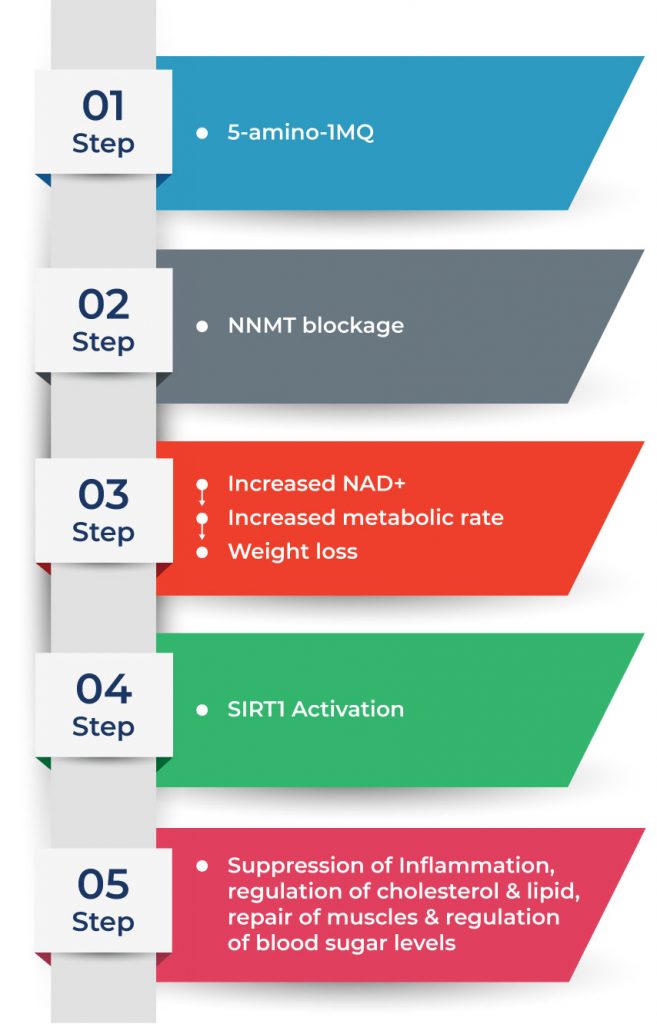
From Genemedics
References related to NNMT & NAD+
- Available from https://apps.dtic.mil/dtic/tr/fulltext/u2/1059191.pdf.View Summary –
- Available from https://diabetes.diabetesjournals.org/content/67/Supplement_1/115-LB.View Summary –
- Neelakantan H, Vance V, Wetzel MD, et al. Selective and membrane-permeable small molecule inhibitors of nicotinamide N-methyltransferase reverse high fat diet-induced obesity in mice. BiochemPharmacol. 2018;147:141–152. doi:10.1016/j.bcp.2017.11.007View Summary –Selective and membrane-permeable small molecule inhibitors of nicotinamide N-methyltransferase reverse high fat diet-induced obesity in miceThe study by Neelakantan et al. in “Biochemical Pharmacology” explores small molecule inhibitors of nicotinamide N-methyltransferase (NNMT) as potential treatments for obesity. NNMT is identified as a key enzyme in cellular metabolism and energy homeostasis. The research focuses on the inhibitors’ properties, like permeability and selectivity, and their effects on obesity measures in mice fed a high-fat diet. Results showed that these inhibitors reduced body weight, adipose mass, and plasma cholesterol levels without affecting food intake or causing adverse effects, supporting the potential of NNMT inhibitors as obesity treatments.For more details https://www.sciencedirect.com/science/article/pii/S0006295217306718
- Kraus D, et al. Nicotinamide N-methyltransferase knockdown protects against diet-induced obesity. Nature. 2014; 508:258–262.View Summary –Nicotinamide N-methyltransferase knockdown protects against diet-induced obesityThe study by Kraus et al., published in Nature in 2014, examines the role of Nicotinamide N-methyltransferase (NNMT) in obesity and type 2 diabetes. The research found that NNMT expression is increased in the white adipose tissue (WAT) and liver of obese and diabetic mice. Knocking down NNMT in WAT and liver was shown to protect against diet-induced obesity by enhancing cellular energy expenditure.The study suggests that NNMT inhibition leads to increased levels of S-adenosylmethionine (SAM) and NAD+ in adipose tissue, which in turn upregulates the activities and expressions of enzymes like ornithine decarboxylase (ODC) and spermidine-spermine N(1)-acetyltransferase (SSAT). These changes are attributed to the impact of NNMT on histone H3 lysine 4 methylation in adipose tissue. Furthermore, the inhibition of NNMT in adipocytes was found to increase oxygen consumption in a manner dependent on ODC, SSAT, and polyamine oxidase (PAO).For more details https://www.nature.com/articles/nature13198
- Kannt A, et al. Association of nicotinamide-N-methyltransferase mRNA expression in humanadipose tissue and the plasma concentration of its product, 1-methylnicotinamide, with insulinresistance. Diabetologia. 2015; doi: 10.1007/s00125-014-3490-7.View Summary –Association of nicotinamide-N-methyltransferase mRNA expression in humanadipose tissue and the plasma concentration of its product, 1-methylnicotinamide, with insulinresistanceThe study by Kannt et al. in “Diabetologia” (2015) found a significant association between the expression of Nicotinamide-N-methyltransferase (NNMT) mRNA in human adipose tissue and insulin resistance in type 2 diabetes. It was observed that higher NNMT expression in white adipose tissue (WAT) correlated with increased plasma concentrations of 1-methylnicotinamide (MNA), which is a product of NNMT activity. This correlation was notably stronger in individuals with type 2 diabetes compared to non-diabetic individuals. The study suggests that plasma MNA and tissue NNMT expression could potentially serve as biomarkers for insulin resistance.For more details https://link.springer.com/article/10.1007/s00125-014-3490-7
- Liu M, et al. Serum N(1)-Methylnicotinamide Is Associated With Obesity and Diabetes in Chinese.J ClinEndocrinolMetab. 2015; 100:3112–3117.View Summary –
- Pissios P. Nicotinamide N-Methyltransferase: More Than a Vitamin B3 Clearance Enzyme. Trends EndocrinolMetab. 2017;28(5):340–353.View Summary –Nicotinamide N-MethyltransferaseThe article by Pissios P., titled “Nicotinamide N-Methyltransferase: More Than a Vitamin B3 Clearance Enzyme,” delves into the multifaceted role of Nicotinamide N-Methyltransferase (NNMT), which extends beyond its primary function of metabolizing vitamin B3. NNMT is shown to have significant involvement in diverse cellular processes such as energy metabolism, glucose regulation, and lipid metabolism. Dysregulation of NNMT is implicated in metabolic disorders like obesity, diabetes, and fatty liver disease, highlighting its potential as a therapeutic target for drug development in these conditions. Overall, the article underscores the importance of understanding NNMT’s broader functions and its relevance in metabolic diseases.For more details https://academic.oup.com/jcem/article-abstract/100/8/3112/2830342
- Neelakantan H, Wang HY, Vance V, Hommel JD, McHardy SF, Watowich SJ. Structure-Activity Relationship for Small Molecule Inhibitors of Nicotinamide N-Methyltransferase. J Med Chem. 2017;60(12):5015–5028.View Summary –Structure–Activity Relationship for Small Molecule Inhibitors of Nicotinamide N-MethyltransferaseThe paper titled “Structure-Activity Relationship for Small Molecule Inhibitors of Nicotinamide N-Methyltransferase” by Neelakantan et al. explores the relationship between the chemical structure of small molecules and their ability to inhibit Nicotinamide N-Methyltransferase (NNMT). The study investigates various compounds and their inhibitory effects on NNMT, providing insights into the design and development of potential NNMT inhibitors, which could have therapeutic implications in the context of metabolic disorders and other diseases.For more details https://pubs.acs.org/doi/abs/10.1021/acs.jmedchem.7b00389
- Kim, Y. B., Peroni, O. D., Aschenbach, W. G., Minokoshi, Y., Kotani, K., Zisman, A., Kahn, C. R., Goodyear, L. J., & Kahn, B. B. (2005). Muscle-specific deletion of the Glut4 glucose transporter alters multiple regulatory steps in glycogen metabolism. Molecular and cellular biology, 25(21), 9713–9723. https://doi.org/10.1128/MCB.25.21.9713-9723.2005.View Summary –Muscle-specific deletion of the Glut4 glucose transporter alters multiple regulatory steps in glycogen metabolismThe paper titled “Muscle-specific deletion of the Glut4 glucose transporter alters multiple regulatory steps in glycogen metabolism” by Kim et al. investigates the impact of muscle-specific deletion of the Glut4 glucose transporter on glycogen metabolism. The study explores how the absence of Glut4 in muscle tissue affects various regulatory aspects of glycogen metabolism. This research provides insights into the role of Glut4 in glucose transport and its downstream effects on glycogen synthesis and breakdown in muscle cells, contributing to our understanding of the molecular mechanisms involved in glucose homeostasis and metabolic regulation. The paper was published in Molecular and Cellular Biology in 2005.For more details https://www.tandfonline.com/doi/abs/10.1128/MCB.25.21.9713-9723.2005
- Carvalho, E., Kotani, K., Peroni, O. D., & Kahn, B. B. (2005). Adipose-specific overexpression of GLUT4 reverses insulin resistance and diabetes in mice lacking GLUT4 selectively in muscle. American journal of physiology. Endocrinology and metabolism, 289(4), E551–E561. https://doi.org/10.1152/ajpendo.00116.2005.View Summary –Adipose-specific overexpression of GLUT4 reverses insulin resistance and diabetes in mice lacking GLUT4 selectively in muscleThe paper titled “Adipose-specific overexpression of GLUT4 reverses insulin resistance and diabetes in mice lacking GLUT4 selectively in muscle” by Carvalho et al. explores the effects of adipose tissue-specific overexpression of the GLUT4 glucose transporter in mice that lack GLUT4 specifically in muscle tissue. The study investigates how this genetic manipulation can reverse insulin resistance and diabetes in these mice. The research highlights the importance of GLUT4 in glucose homeostasis and demonstrates the potential therapeutic implications of adipose-specific GLUT4 overexpression in the context of insulin resistance and diabetes. The paper was published in the American Journal of Physiology.For more details https://journals.physiology.org/doi/abs/10.1152/ajpendo.00116.2005
- X. Ye, M. Li, T. Hou, T. Gao, W.-g. Zhu, Y. Yang. Sirtuins in glucose and lipid metabolism. Oncotarget, 8 (1) (2016), pp. 1845-1859.View Summary –Sirtuins in glucose and lipid metabolismThe article titled “Sirtuins in glucose and lipid metabolism” by Ye et al. discusses the role of sirtuins, a family of proteins with deacetylase activity, in regulating glucose and lipid metabolism. Published in 2016 in Oncotarget, the paper delves into how sirtuins are involved in the modulation of metabolic processes, including glucose utilization and lipid storage. It sheds light on the potential therapeutic implications of targeting sirtuins for metabolic disorders such as diabetes and obesity.For more details https://www.ncbi.nlm.nih.gov/pmc/articles/PMC5352102/
- H. Yaguchi, K. Togawa, M. Moritani, and M. Itakura, “Identification of candidate genes in the type 2 diabetes modifier locus using expression QTL,” Genomics, vol. 85, no. 5, pp. 591–599, 2005.View Summary –Identification of candidate genes in the type 2 diabetes modifier locus using expression QTLThe paper titled “Identification of candidate genes in the type 2 diabetes modifier locus using expression QTL” by Yaguchi et al., published in Genomics in 2005, discusses the identification of potential candidate genes within a locus that modifies type 2 diabetes. The study utilizes expression quantitative trait loci (eQTL) analysis to identify genes whose expression levels are associated with the modifier locus. This research aims to provide insights into the genetic factors and molecular mechanisms underlying type 2 diabetes, with a focus on genes that may play a role in its modification or development.For more details https://www.sciencedirect.com/science/article/pii/S0888754305000200
- A. Kannt, A. Pfenninger, L. Teichert et al., “Association of nicotinamide-N-methyltransferase mRNA expression in human adipose tissue and the plasma concentration of its product, 1-methylnicotinamide, with insulin resistance,” Diabetologia, vol. 58, no. 4, pp. 799–808, 2015.View Summary –Association of nicotinamide-N-methyltransferase mRNA expression in human adipose tissue and the plasma concentration of its product, 1-methylnicotinamide, with insulin resistanceThe article titled “Association of nicotinamide-N-methyltransferase mRNA expression in human adipose tissue and the plasma concentration of its product, 1-methylnicotinamide, with insulin resistance” by Kannt et al., published in Diabetologia in 2015, explores the relationship between the expression of nicotinamide-N-methyltransferase (NNMT) mRNA in human adipose tissue and the plasma concentration of its product, 1-methylnicotinamide, with insulin resistance. The study investigates the potential link between NNMT activity and insulin resistance, providing insights into the molecular mechanisms associated with metabolic disorders such as diabetes.For more details https://link.springer.com/article/10.1007/s00125-014-3490-7
- D. Kraus, Q. Yang, D. Kong et al., “Nicotinamide N-methyltransferase knockdown protects against diet-induced obesity,” Nature, vol. 508, no. 7495, pp. 258–262, 2014.View Summary –Nicotinamide N-methyltransferase knockdown protects against diet-induced obesityThe article titled “Nicotinamide N-methyltransferase knockdown protects against diet-induced obesity” by Kraus et al., published in Nature in 2014, presents research on the role of Nicotinamide N-methyltransferase (NNMT) in diet-induced obesity. The study investigates the effects of reducing NNMT expression, suggesting that its knockdown can protect against the development of obesity in the context of a high-fat diet. This research contributes to our understanding of the molecular factors involved in obesity and highlights NNMT as a potential therapeutic target for obesity-related conditions.For more details https://www.nature.com/articles/nature13198
- S. Hong, J. M. Moreno-Navarrete, X. Wei et al., “Nicotinamide N -methyltransferase regulates hepatic nutrient metabolism through Sirt1 protein stabilization,” Nature medicine, vol. 21, no. 8, pp. 887–894, 2015.View Summary –Nicotinamide N -methyltransferase regulates hepatic nutrient metabolism through Sirt1 protein stabilizationThe article titled “Nicotinamide N-methyltransferase regulates hepatic nutrient metabolism through Sirt1 protein stabilization” by Hong et al., published in Nature Medicine in 2015, investigates the role of Nicotinamide N-methyltransferase (NNMT) in regulating nutrient metabolism in the liver. The study explores how NNMT influences hepatic metabolism by stabilizing the Sirt1 protein. Sirt1 is known to play a crucial role in metabolic processes, and this research provides insights into the molecular mechanisms by which NNMT impacts nutrient metabolism, shedding light on potential therapeutic targets for metabolic disorders.For more details https://www.nature.com/articles/nm.3882
- J. H. Li, Y. H. Wang, X. J. Zhu, Q. Zhou, Z. H. Xie, and T. F. Yao, “Metabolomics study on the association between nicotinamide N-methyltransferase gene polymorphisms and type 2 diabetes,” International Journal of Diabetes in Developing Countries, vol. 38, pp. 409–416, 2018.View Summary –Metabolomics study on the association between nicotinamide N-methyltransferase gene polymorphisms and type 2 diabetesThe paper titled “Metabolomics study on the association between nicotinamide N-methyltransferase gene polymorphisms and type 2 diabetes” by Li et al., published in the International Journal of Diabetes in Developing Countries in 2018, presents a study that investigates the potential association between nicotinamide N-methyltransferase (NNMT) gene polymorphisms and type 2 diabetes. The research employs metabolomics to explore the relationship between genetic variations in the NNMT gene and the development of type 2 diabetes, providing insights into the genetic factors that may contribute to the risk of this metabolic disorder.For more details https://link.springer.com/article/10.1007/s13410-017-0601-2
- Moraes-Vieira, P. M., Saghatelian, A., & Kahn, B. B. (2016). GLUT4 Expression in Adipocytes Regulates De Novo Lipogenesis and Levels of a Novel Class of Lipids With Antidiabetic and Anti-inflammatory Effects. Diabetes, 65(7), 1808–1815. https://doi.org/10.2337/db16-0221.View Summary –GLUT4 expression in adipocytes regulates de novo lipogenesis and levels of a novel class of lipids with antidiabetic and anti-inflammatory effectsThe article titled “GLUT4 Expression in Adipocytes Regulates De Novo Lipogenesis and Levels of a Novel Class of Lipids With Antidiabetic and Anti-inflammatory Effects” by Moraes-Vieira et al., published in Diabetes in 2016, discusses the role of GLUT4 (glucose transporter 4) expression in adipocytes in regulating de novo lipogenesis and the production of a novel class of lipids. These lipids are found to have both antidiabetic and anti-inflammatory effects. The study explores how GLUT4 expression influences lipid metabolism in adipocytes and its potential implications for diabetes and inflammation, providing valuable insights into the complex relationship between glucose transport, lipid synthesis, and metabolic regulation.For more details https://diabetesjournals.org/diabetes/article-abstract/65/7/1808/16104
- Kim HC, et al. Expression and functional significance of nicotinamide N-methyl transferase inskeletal muscles of patients with chronic obstructive pulmonary disease. Am J RespirCrit CareMed. 2010; 181:797–805.View Summary –Expression and functional significance of nicotinamide N-methyl transferase inskeletal muscles of patients with chronic obstructive pulmonary diseaseThe study titled “Expression and functional significance of nicotinamide N-methyl transferase in skeletal muscles of patients with chronic obstructive pulmonary disease” by Kim et al., published in the American Journal of Respiratory and Critical Care Medicine in 2010, investigates the expression and functional role of nicotinamide N-methyl transferase (NNMT) in the skeletal muscles of individuals with chronic obstructive pulmonary disease (COPD). The research explores the potential implications of NNMT in the context of muscle function and COPD, shedding light on its role in the disease and its relevance to muscle-related complications in COPD patients.For more details https://www.atsjournals.org/doi/abs/10.1164/rccm.200906-0936oc
- Savarimuthu Francis SM, et al. Genes and gene ontologies common to airflow obstruction andemphysema in the lungs of patients with COPD. PloS One. 2011; 6:e17442.View Summary –Genes and gene ontologies common to airflow obstruction andemphysema in the lungs of patients with COPDThe study titled “Genes and gene ontologies common to airflow obstruction and emphysema in the lungs of patients with COPD” by Savarimuthu Francis et al., published in PLOS ONE in 2011, explores the shared genes and gene ontologies associated with airflow obstruction and emphysema in the lungs of individuals with Chronic Obstructive Pulmonary Disease (COPD). The research aims to identify common molecular pathways and genetic factors that contribute to both airflow limitation and emphysema in COPD patients, providing insights into the underlying mechanisms of the disease and potential therapeutic targets.For more details https://journals.plos.org/plosone/article?id=10.1371/journal.pone.0017442
- Sternak M, et al. Nicotinamide N-methyltransferase (NNMT) and 1-methylnicotinamide (MNA) in experimental hepatitis induced by concanavalin A in the mouse. Pharmacol Rep PR. 2010;62:483–493.View Summary –Nicotinamide N-methyltransferase (NNMT) and 1-methylnicotinamide (MNA) in experimental hepatitis induced by concanavalin A in the mouseThe study titled “Nicotinamide N-methyltransferase (NNMT) and 1-methylnicotinamide (MNA) in experimental hepatitis induced by concanavalin A in the mouse” by Sternak et al., published in Pharmacological Reports in 2010, investigates the role of Nicotinamide N-methyltransferase (NNMT) and its product 1-methylnicotinamide (MNA) in an experimental model of hepatitis induced by concanavalin A in mice. The research explores the potential involvement of NNMT and MNA in the context of hepatitis, shedding light on their roles in the pathophysiology of liver inflammation and disease.For more details https://link.springer.com/article/10.1016/S1734-1140(10)70304-2
- Fedorowicz A, et al. Activation of the nicotinamide N-methyltransferase (NNMT)-1-methylnicotinamide (MNA) pathway in pulmonary hypertension. Respir Res. 2016; 17:108.View Summary –Activation of the nicotinamide N-methyltransferase (NNMT)-1-methylnicotinamide (MNA) pathway in pulmonary hypertensionThe article titled “Activation of the nicotinamide N-methyltransferase (NNMT)-1-methylnicotinamide (MNA) pathway in pulmonary hypertension” by Fedorowicz et al., published in Respiratory Research in 2016, explores the activation of the nicotinamide N-methyltransferase (NNMT) pathway and the production of 1-methylnicotinamide (MNA) in the context of pulmonary hypertension. The study investigates the potential role of this pathway in the pathophysiology of pulmonary hypertension, providing insights into its molecular mechanisms and potential implications for the disease.For more details https://link.springer.com/article/10.1186/s12931-016-0423-7
- Jakubowski A, et al. 1-Methylnicotinamide protects against liver injury induced by concanavalin Avia a prostacyclin-dependent mechanism: A possible involvement of IL-4 and TNF-α. IntImmunopharmacol. 2016; 31:98–104.View Summary –1-Methylnicotinamide protects against liver injury induced by concanavalin A via a prostacyclin-dependent mechanism: a possible involvement of IL-4 and TNF-αThe study titled “1-Methylnicotinamide protects against liver injury induced by concanavalin A via a prostacyclin-dependent mechanism: A possible involvement of IL-4 and TNF-α” by Jakubowski et al., published in the International Immunopharmacology journal in 2016, investigates the protective effects of 1-Methylnicotinamide (MNA) against liver injury induced by concanavalin A. The research suggests that MNA’s protection is mediated through a prostacyclin-dependent mechanism and potentially involves the modulation of interleukin-4 (IL-4) and tumor necrosis factor-alpha (TNF-α). This study provides insights into the mechanisms underlying MNA’s protective effects on liver injury and its potential implications for inflammatory processes involving IL-4 and TNF-α.For more details https://www.sciencedirect.com/science/article/pii/S1567576915302009
- Markert JM, et al. Differential gene expression profiling in human brain tumors. Physiol Genomics. 2001;5:21–33.View Summary –Differential gene expression profiling in human brain tumorsThe study titled “Differential gene expression profiling in human brain tumors” by Markert et al., published in Physiological Genomics in 2001, focuses on the analysis of differential gene expression patterns in human brain tumors. The research aims to identify and characterize the unique gene expression profiles associated with various types of brain tumors. By comparing these profiles, the study seeks to gain a better understanding of the molecular mechanisms underlying brain tumor development and progression, potentially leading to insights into novel diagnostic and therapeutic approaches for these conditions.For more details https://journals.physiology.org/doi/abs/10.1152/physiolgenomics.2001.5.1.21
- Xu J, et al. Enhanced expression of nicotinamide N-methyltransferase in human papillary thyroid carcinoma cells. J ClinEndocrinolMetab. 2003;88:4990–4996.View Summary –Enhanced Expression of Nicotinamide N-Methyltransferase in Human Papillary Thyroid Carcinoma CellsThe study titled “Enhanced expression of nicotinamide N-methyltransferase in human papillary thyroid carcinoma cells” by Xu et al., published in the Journal of Clinical Endocrinology and Metabolism in 2003, investigates the increased expression of nicotinamide N-methyltransferase (NNMT) in human papillary thyroid carcinoma cells. The research explores the potential role of NNMT in thyroid cancer, providing insights into its involvement in the disease and its potential implications for diagnosis and treatment.For more details https://academic.oup.com/jcem/article-abstract/88/10/4990/2845853
- Yao M, et al. Gene expression analysis of renal carcinoma: adipose differentiation-related protein as a potential diagnostic and prognostic biomarker for clear-cell renal carcinoma. J Pathol. 2005;205:377–387.View Summary –Gene expression analysis of renal carcinoma: adipose differentiation-related protein as a potential diagnostic and prognostic biomarker for clear-cell renal carcinomaThe study titled “Gene expression analysis of renal carcinoma: adipose differentiation-related protein as a potential diagnostic and prognostic biomarker for clear-cell renal carcinoma” by Yao et al., published in the Journal of Pathology in 2005, conducts gene expression analysis in renal carcinoma. The research identifies adipose differentiation-related protein as a potential biomarker for clear-cell renal carcinoma, suggesting its utility in the diagnosis and prognosis of this type of kidney cancer. This study contributes to the understanding of molecular markers associated with clear-cell renal carcinoma and their potential clinical applications.For more details https://onlinelibrary.wiley.com/doi/abs/10.1002/path.1693
- Wu Y, et al. Overlapping gene expression profiles of cell migration and tumor invasion in human bladder cancer identify metallothionein 1E and nicotinamide N-methyltransferase as novel regulators of cell migration. Oncogene. 2008;27:6679–6689.View Summary –Overlapping gene expression profiles of cell migration and tumor invasion in human bladder cancer identify metallothionein 1E and nicotinamide N-methyltransferase as novel regulators of cell migrationThe study titled “Overlapping gene expression profiles of cell migration and tumor invasion in human bladder cancer identify metallothionein 1E and nicotinamide N-methyltransferase as novel regulators of cell migration” by Wu et al., published in the journal Oncogene in 2008, investigates the gene expression profiles associated with both cell migration and tumor invasion in human bladder cancer. The research identifies two novel regulators of cell migration, metallothionein 1E and nicotinamide N-methyltransferase, shedding light on their potential roles in bladder cancer progression. This study contributes to the understanding of the molecular mechanisms underlying cancer cell migration and invasion, which are crucial processes in cancer metastasis and progression.For more details https://www.nature.com/articles/onc2008264
- Jang JS, et al. The differential proteome profile of stomach cancer: identification of the biomarker candidates. Oncol Res. 2004;14:491–499.View Summary –The differential proteome profile of stomach cancer: identification of the biomarker candidatesThe study titled “The differential proteome profile of stomach cancer: identification of the biomarker candidates” by Jang et al., published in Oncology Research in 2004, focuses on identifying differential protein expression patterns in stomach cancer. The research aims to discover potential biomarker candidates that could be used for the diagnosis or monitoring of stomach cancer. By analyzing the proteome profile of stomach cancer, this study contributes to the search for markers that may assist in the early detection and management of this disease.For more details https://www.ingentaconnect.com/contentone/cog/or/2004/00000014/00000010/art00004?crawler=true&mimetype=application/pdf
- Lim BH, et al. Overexpression of nicotinamide N-methyltransferase in gastric cancer tissues and its potential post-translational modification. ExpMol Med. 2006;38:455–465.View Summary –Overexpression of nicotinamide N-methyltransferase in gastric cancer tissues and its potential post-translational modificationThe study titled “Overexpression of nicotinamide N-methyltransferase in gastric cancer tissues and its potential post-translational modification” by Lim et al., published in Experimental and Molecular Medicine in 2006, investigates the overexpression of nicotinamide N-methyltransferase (NNMT) in gastric cancer tissues. The research also explores the potential post-translational modifications of NNMT in the context of gastric cancer. This study contributes to our understanding of the role of NNMT in gastric cancer and its potential implications as a molecular marker or target for therapeutic intervention in the disease.For more details https://www.nature.com/articles/emm200654
- Roessler M, et al. Identification of nicotinamide N-methyltransferase as a novel serum tumor marker for colorectal cancer. Clin Cancer Res Off J Am Assoc Cancer Res. 2005;11:6550–6557.View Summary –Identification of nicotinamide N-methyltransferase as a novel serum tumor marker for colorectal cancerThe study titled “Identification of nicotinamide N-methyltransferase as a novel serum tumor marker for colorectal cancer” by Roessler et al., published in Clinical Cancer Research in 2005, identifies nicotinamide N-methyltransferase (NNMT) as a potential serum tumor marker for colorectal cancer. The research suggests that NNMT could be used as a diagnostic marker to detect colorectal cancer in the blood serum, offering a non-invasive means of screening for this type of cancer. This study contributes to the search for reliable biomarkers for the early detection and monitoring of colorectal cancer.For more details https://aacrjournals.org/clincancerres/article-abstract/11/18/6550/185985
- Sartini D, et al. Nicotinamide N-methyltransferaseupregulation inversely correlates with lymph node metastasis in oral squamous cell carcinoma. Mol Med Camb Mass. 2007;13:415–421.View Summary –Nicotinamide N-methyltransferaseupregulation inversely correlates with lymph node metastasis in oral squamous cell carcinomaThe study titled “Nicotinamide N-methyltransferase upregulation inversely correlates with lymph node metastasis in oral squamous cell carcinoma” by Sartini et al., published in Molecular Medicine in 2007, explores the upregulation of Nicotinamide N-methyltransferase (NNMT) and its correlation with lymph node metastasis in oral squamous cell carcinoma. The research suggests that increased NNMT expression is associated with a reduced likelihood of lymph node metastasis in this type of cancer. This finding may have implications for understanding the molecular mechanisms underlying the spread of oral squamous cell carcinoma and could potentially be relevant for prognosis and treatment strategies.For more details https://link.springer.com/article/10.2119/2007-00035.Sartini
- Wu Y, et al. Overlapping gene expression profiles of cell migration and tumor invasion in human bladder cancer identify metallothionein 1E and nicotinamide N-methyltransferase as novel regulators of cell migration. Oncogene. 2008;27:6679–6689.View Summary –
- Yu T, et al. Effects of nicotinamide N-methyltransferase on PANC-1 cells proliferation, metastatic potential and survival under metabolic stress. Cell PhysiolBiochemInt J Exp Cell PhysiolBiochemPharmacol. 2015;35:710–721.View Summary –Effects of nicotinamide N-methyltransferase on PANC-1 cells proliferation, metastatic potential and survival under metabolic stressThe study titled “Effects of nicotinamide N-methyltransferase on PANC-1 cells proliferation, metastatic potential and survival under metabolic stress” by Yu et al., published in the journal Cellular Physiology and Biochemistry in 2015, investigates the impact of Nicotinamide N-methyltransferase (NNMT) on various aspects of PANC-1 cells, including proliferation, metastatic potential, and survival under metabolic stress conditions. The research explores how NNMT influences the behavior and survival of these cells, shedding light on its potential role in pancreatic cancer biology and response to metabolic stress. This study contributes to the understanding of the molecular mechanisms involved in cancer progression and adaptation to challenging conditions.For more details https://karger.com/cpb/article/35/2/710/75011
- Tang SW, et al. Nicotinamide N-methyltransferase induces cellular invasion through activating matrix metalloproteinase-2 expression in clear cell renal cell carcinoma cells. Carcinogenesis. 2011;32:138–145.View Summary –Nicotinamide N-methyltransferase induces cellular invasion through activating matrix metalloproteinase-2 expression in clear cell renal cell carcinoma cellsThe study titled “Nicotinamide N-methyltransferase induces cellular invasion through activating matrix metalloproteinase-2 expression in clear cell renal cell carcinoma cells” by Tang et al., published in Carcinogenesis in 2011, investigates how Nicotinamide N-methyltransferase (NNMT) influences cellular invasion in clear cell renal cell carcinoma. The research focuses on NNMT’s role in activating the expression of matrix metalloproteinase-2 (MMP-2), which is associated with cellular invasion. This study provides insights into the molecular mechanisms underlying the invasive properties of clear cell renal cell carcinoma cells, potentially contributing to our understanding of the disease’s progression and suggesting potential therapeutic targets.For more details https://academic.oup.com/carcin/article-abstract/32/2/138/2391464
- Pozzi V, et al. RNA-mediated gene silencing of nicotinamide N-methyltransferase is associated with decreased tumorigenicity in human oral carcinoma cells. PloS One. 2013;8:e71272.View Summary –RNA-mediated gene silencing of nicotinamide N-methyltransferase is associated with decreased tumorigenicity in human oral carcinoma cellsThe study titled “RNA-mediated gene silencing of nicotinamide N-methyltransferase is associated with decreased tumorigenicity in human oral carcinoma cells” by Pozzi et al., published in PLOS ONE in 2013, investigates the impact of RNA-mediated gene silencing of Nicotinamide N-methyltransferase (NNMT) on the tumorigenicity of human oral carcinoma cells. The research explores how suppressing NNMT expression through RNA interference affects the cancer cells’ tumorigenic potential. This study provides insights into the potential therapeutic strategies targeting NNMT for the treatment of oral carcinoma and highlights its role in cancer development.For more details https://journals.plos.org/plosone/article?id=10.1371/journal.pone.0071272
- Bach DH, Kim D, Bae SY, et al. Targeting Nicotinamide N-Methyltransferase and miR-449a in EGFR-TKI-Resistant Non-Small-Cell Lung Cancer Cells. MolTher Nucleic Acids. 2018;11:455–467. doi:10.1016/j.omtn.2018.03.011.View Summary –Targeting nicotinamide N-methyltransferase and miR-449a in EGFR-TKI-resistant non-small-cell lung cancer cellsThe study titled “Targeting Nicotinamide N-Methyltransferase and miR-449a in EGFR-TKI-Resistant Non-Small-Cell Lung Cancer Cells” by Bach et al., published in Molecular Therapy – Nucleic Acids in 2018, explores the potential therapeutic strategy of targeting Nicotinamide N-Methyltransferase (NNMT) and microRNA-449a (miR-449a) in non-small-cell lung cancer cells that have become resistant to EGFR-TKI (Epidermal Growth Factor Receptor Tyrosine Kinase Inhibitors). The research investigates how inhibiting NNMT and utilizing miR-449a can potentially overcome resistance to EGFR-TKI treatment in lung cancer cells. This study contributes to the understanding of molecular mechanisms involved in drug resistance and suggests potential strategies for improving the efficacy of targeted therapies in non-small-cell lung cancer.For more details https://www.cell.com/molecular-therapy-family/nucleic-acids/fulltext/S2162-2531(18)30042-8
- Bae S.Y., Park H.J., Hong J.Y., Lee H.J., Lee S.K. Down-regulation of SerpinB2 is associated with gefitinib resistance in non-small cell lung cancer and enhances invadopodia-like structure protrusions. Sci. Rep. 2016;6:32258.View Summary –Down-regulation of SerpinB2 is associated with gefitinib resistance in non-small cell lung cancer and enhances invadopodia-like structure protrusionsThe study titled “Down-regulation of SerpinB2 is associated with gefitinib resistance in non-small cell lung cancer and enhances invadopodia-like structure protrusions” by Bae et al., published in Scientific Reports in 2016, investigates the role of SerpinB2 in gefitinib resistance in non-small cell lung cancer. The research explores how the down-regulation of SerpinB2 is associated with resistance to gefitinib, a targeted therapy for lung cancer. Additionally, the study examines how this down-regulation may contribute to the formation of invadopodia-like structure protrusions in cancer cells. Understanding the mechanisms of resistance and invasive behavior in lung cancer cells can have implications for the development of more effective treatments.For more details https://www.nature.com/articles/srep32258
- Gao Y, Van haren MJ, Moret EE, et al. Bisubstrate Inhibitors of Nicotinamide -Methyltransferase (NNMT) with Enhanced Activity. J Med Chem. 2019;62(14):6597-6614.View Summary –Bisubstrate Inhibitors of Nicotinamide -Methyltransferase (NNMT) with Enhanced ActivityThe study titled “Bisubstrate Inhibitors of Nicotinamide N-Methyltransferase (NNMT) with Enhanced Activity” by Gao et al., published in the Journal of Medicinal Chemistry in 2019, focuses on the development of bisubstrate inhibitors targeting Nicotinamide N-Methyltransferase (NNMT). These inhibitors are designed to have enhanced activity compared to traditional inhibitors. The research explores the potential of these compounds to modulate NNMT activity and may have implications for the development of therapeutic agents targeting NNMT for various medical applications.For more details https://pubs.acs.org/doi/abs/10.1021/acs.jmedchem.9b00413
- Neelakantan H, Brightwell CR, Graber TG, et al. Small molecule nicotinamide N-methyltransferase inhibitor activates senescent muscle stem cells and improves regenerative capacity of aged skeletal muscle. BiochemPharmacol. 2019;163:481-492.View Summary –Small molecule nicotinamide N-methyltransferase inhibitor activates senescent muscle stem cells and improves regenerative capacity of aged skeletal muscleThe study titled “Small molecule nicotinamide N-methyltransferase inhibitor activates senescent muscle stem cells and improves regenerative capacity of aged skeletal muscle” by Neelakantan et al., published in Biochemical Pharmacology in 2019, investigates the effects of a small molecule inhibitor of Nicotinamide N-methyltransferase (NNMT) on senescent muscle stem cells and its potential to enhance the regenerative capacity of aged skeletal muscle. The research explores the potential of this inhibitor to activate dormant or senescent muscle stem cells, which may have implications for improving muscle regeneration in the context of aging and age-related muscle decline. This study contributes to our understanding of potential strategies for addressing muscle aging and related issues.For more details https://www.sciencedirect.com/science/article/pii/S0006295219300462
- Zhang H, et al. NAD+ repletion improves mitochondrial and stem cell function and enhances lifespan in mice. Science. 2016; 352:1436–1443.View Summary –NAD+ repletion improves mitochondrial and stem cell function and enhances lifespan in miceThe study titled “NAD+ repletion improves mitochondrial and stem cell function and enhances lifespan in mice” by Zhang et al., published in Science in 2016, investigates the effects of replenishing nicotinamide adenine dinucleotide (NAD+) on mitochondrial function, stem cell activity, and overall lifespan in mice. The research explores how boosting NAD+ levels can potentially enhance various aspects of cellular and organismal health, ultimately leading to an extension of the lifespan in mice. This study sheds light on the potential therapeutic applications of NAD+ supplementation for improving aging-related health issues and longevity.For more details https://www.science.org/doi/abs/10.1126/science.aaf2693
- Ryu, D., Zhang, H., Ropelle, E. R., Sorrentino, V., Mázala, D. A., Mouchiroud, L., Marshall, P. L., Campbell, M. D., Ali, A. S., Knowels, G. M., Bellemin, S., Iyer, S. R., Wang, X., Gariani, K., Sauve, A. A., Cantó, C., Conley, K. E., Walter, L., Lovering, R. M., Chin, E. R., … Auwerx, J. (2016). NAD+ repletion improves muscle function in muscular dystrophy and counters global PARylation. Science translational medicine, 8(361), 361ra139. https://doi.org/10.1126/scitranslmed.aaf5504.View Summary –NAD+ repletion improves muscle function in muscular dystrophy and counters global PARylationThe study titled “NAD+ repletion improves muscle function in muscular dystrophy and counters global PARylation” by Ryu et al., published in Science Translational Medicine in 2016, investigates the effects of nicotinamide adenine dinucleotide (NAD+) repletion on muscle function in the context of muscular dystrophy. The research explores how boosting NAD+ levels can potentially improve muscle function and counteract excessive poly(ADP-ribosyl)ation (PARylation) in muscular dystrophy. This study provides insights into potential therapeutic strategies for addressing muscle-related issues in the context of muscular dystrophy and highlights the role of NAD+ in muscle health.For more details https://www.science.org/doi/abs/10.1126/scitranslmed.aaf5504
- Pissios P. (2017). Nicotinamide N-Methyltransferase: More Than a Vitamin B3 Clearance Enzyme. Trends in endocrinology and metabolism: TEM, 28(5), 340–353. https://doi.org/10.1016/j.tem.2017.02.004.View Summary –Nicotinamide N-methyltransferase: more than a vitamin B3 clearance enzymeThe review article titled “Nicotinamide N-Methyltransferase: More Than a Vitamin B3 Clearance Enzyme” by Pissios, published in Trends in Endocrinology and Metabolism (TEM) in 2017, provides an in-depth exploration of the multifaceted roles of Nicotinamide N-Methyltransferase (NNMT). Beyond its traditional role in vitamin B3 clearance, the article discusses how NNMT is involved in various cellular processes, including energy metabolism, glucose regulation, and lipid metabolism. Dysregulation of NNMT is linked to metabolic disorders such as obesity and diabetes, emphasizing its potential as a therapeutic target for these conditions. The article highlights the broader functions of NNMT beyond its enzymatic role in vitamin B3 metabolism.For more details https://www.cell.com/trends/endocrinology-metabolism/fulltext/S1043-2760(17)30020-6
 Diary of Recovery