
This Page is a supplement to our Bioregulator Peptide Guide 🧬
We can achieve synergistic health goals and treat even our complex issues by using bioregulators in combination.
Here are the organs that can be supported:

Below are examples of conditions with corresponding organs that may need to be supported / rejuvenated.
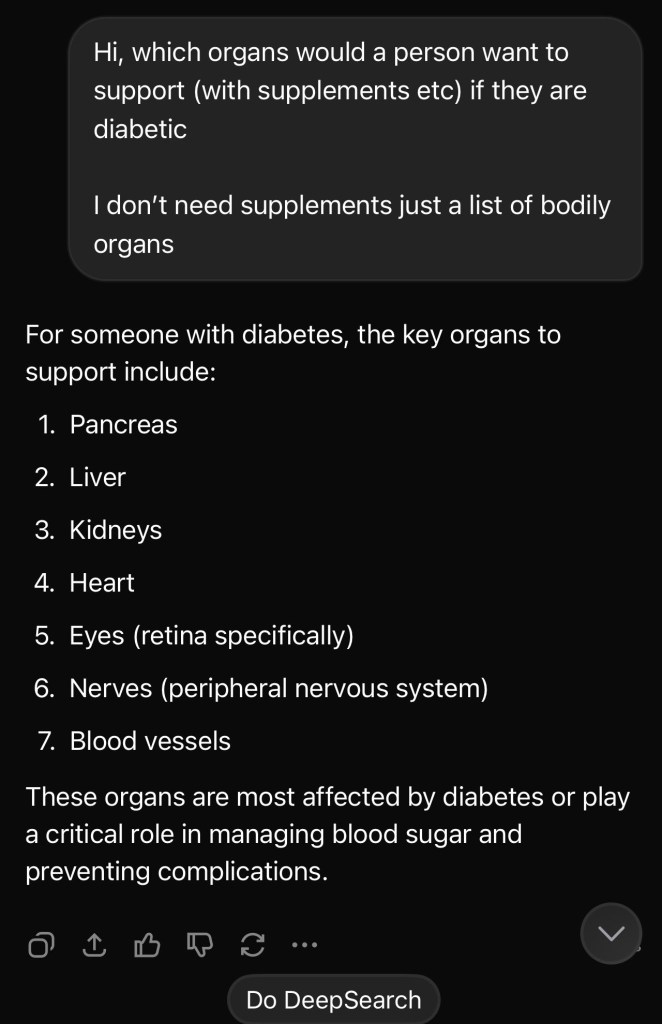
Asking AI to help determine which organs are causing your condition or symptoms is an easy way to narrow down your list.
Here’s a simplified Example:
How & where to purchase
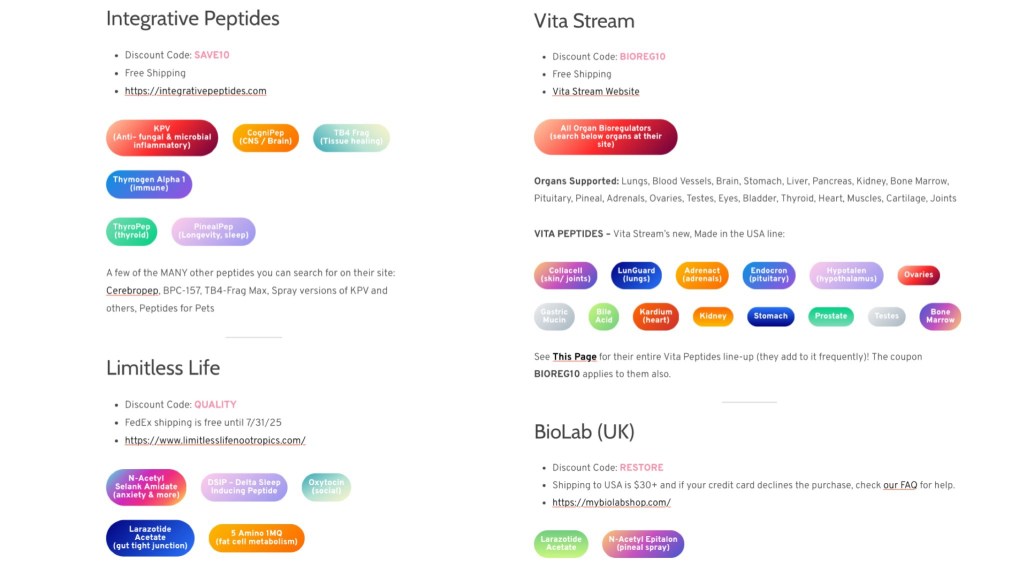
When you have your list of organs, you can shop for the corresponding bioregulator peptides at our page here:
Https://diaryofrecovery.com/buy
You may also want to see our page:
Organ Health Map: Understanding Roles and Warning Signs
Developing your organ specific list

12 Examples – Conditions from Dysfunction of Multiple Organs
When multiple organs listed above fail to function optimally together, certain conditions or syndromes can emerge due to their interconnected roles.
Here are examples demonstrating how organ dysfunctions interact.
1. Metabolic Syndrome
• Organs Involved: Pancreas, Liver, Blood Vessels, Adrenal.
• Mechanism: Pancreatic dysfunction (insulin resistance, Type 2 diabetes), liver issues (fatty liver), blood vessel damage (atherosclerosis, hypertension), and adrenal hormone imbalances (cortisol excess) contribute to a cluster of conditions.
• Symptoms: High blood sugar, abdominal obesity, high blood pressure, high triglycerides, low HDL cholesterol, increasing risk of heart disease and stroke.
• Example: A poorly functioning pancreas (insulin resistance) and liver (fatty liver) can raise blood sugar and lipids, straining blood vessels and causing adrenal-driven hypertension.
2. Cardiovascular Disease
• Organs Involved: Heart, Blood Vessels, Kidneys, Adrenal.
• Mechanism: Heart dysfunction (heart failure, arrhythmias), blood vessel issues (atherosclerosis, hypertension), kidney problems (fluid retention, high blood pressure), and adrenal issues (aldosterone excess) amplify cardiovascular strain.
• Symptoms: Chest pain, shortness of breath, swelling, fatigue, increased risk of heart attack or stroke.
• Example: Kidney dysfunction raises blood pressure, stressing blood vessels and the heart, while adrenal hormone imbalances exacerbate hypertension.
3. Anemia-Related Syndromes
• Organs Involved: Bone Marrow, Stomach, Liver, Kidneys.
• Mechanism: Bone marrow dysfunction (low red blood cell production), stomach issues (low B12 absorption, as in pernicious anemia), liver problems (impaired iron storage or metabolism), and kidney issues (reduced erythropoietin, a hormone for red blood cell production) cause or worsen anemia.
• Symptoms: Fatigue, dizziness, weakness, lightheadedness, pale skin (aligns with your symptoms).
• Example: Stomach dysfunction (low B12 absorption, combined with bone marrow issues (low red blood cell production) and kidney problems (low erythropoietin) can lead to severe anemia.
4. Endocrine Disorders
(e.g., Multiple Endocrine Neoplasia)
• Organs Involved: Adrenal, Thyroid, Parathyroid, Pancreas, Pineal.
• Mechanism: Dysfunction in multiple endocrine organs (e.g., adrenal tumors, thyroid nodules, parathyroid hyperplasia, pancreatic islet cell tumors) disrupts hormone balance, affecting metabolism, calcium levels, and sleep.
• Symptoms: Fatigue, weight changes, bone pain, high blood pressure, sleep disturbances, diabetes.
• Example: Adrenal and thyroid dysfunction together can cause erratic metabolism, while parathyroid issues disrupt calcium, compounding fatigue and weakness.
5. Autoimmune Diseases
• Organs Involved: Thymus, Kidneys, Brain/CNS, Muscles, Cartilage.
• Mechanism: Thymus dysfunction (overactive immune response) leads to autoimmune attacks on kidneys (lupus nephritis), brain (neuropsychiatric symptoms), muscles (weakness), or cartilage (joint pain).
• Symptoms: Fatigue, joint pain, muscle weakness, neurological issues, kidney dysfunction.
• Example: Thymus-driven immune dysregulation can damage kidneys and cartilage, causing swelling, pain, and fatigue.
6. Chronic Fatigue and Muscle Weakness Syndromes
• Organs Involved: Adrenal, Thyroid, Muscles, Brain/CNS, Mitochondria (Liver, Muscle).
• Mechanism: Adrenal insufficiency (low cortisol), hypothyroidism (low metabolism), muscle dysfunction (myopathy or mitochondrial issues), and brain/CNS issues (neurotransmitter imbalances) contribute to systemic energy deficits.
• Symptoms: Severe fatigue, muscle weakness, dizziness, cognitive fog (overlaps with your symptoms).
• Example: Adrenal and thyroid dysfunction slow metabolism, while muscle and mitochondrial issues (also see: NAD+) reduce energy production, amplifying weakness.
7. Issues occurring during Menopause
• Organs Involved: Ovaries, Brain/CNS, Adrenal, Thyroid, Bone Marrow, Cartilage, Heart, Blood Vessels.
• Mechanism: Menopause occurs when the ovaries cease producing estrogen and progesterone, triggering a cascade of effects across multiple organs.
The brain/CNS (hypothalamus) struggles to regulate temperature and mood due to hormonal shifts.
Adrenal glands take over some estrogen production but may become overtaxed, contributing to fatigue. Thyroid dysfunction can exacerbate symptoms if metabolism is already sluggish.
Bone marrow and cartilage are affected as low estrogen accelerates bone loss (osteoporosis) and joint degradation.
Heart and blood vessels face increased risk of disease due to reduced estrogen’s protective effects on cholesterol and vessel elasticity.
• Symptoms: Hot flashes, night sweats, mood swings, depression, anxiety, memory issues, fatigue, joint pain, bone loss, increased risk of heart disease, high blood pressure, vaginal dryness, reduced libido, sleep disturbances.
• Example: Ovarian failure (low estrogen) disrupts brain/CNS function (hot flashes, mood changes), while adrenal strain worsens fatigue. Declining estrogen affects cartilage (joint pain) and blood vessels (atherosclerosis risk), compounding heart strain.
8. Chronic Kidney Disease (CKD) Progression
• Organs Involved: Kidneys, Heart, Blood Vessels, Bone Marrow, Parathyroid, Lungs.
• Mechanism: Kidney dysfunction (impaired filtration) leads to fluid retention, toxin buildup, and electrolyte imbalances, straining the heart (heart failure) and blood vessels (hypertension, atherosclerosis).
Bone marrow produces fewer red blood cells due to low erythropoietin (a kidney hormone), causing anemia.
Parathyroid overactivity (secondary hyperparathyroidism) from calcium/phosphorus imbalance weakens bones.
Fluid buildup in lungs can cause shortness of breath.
• Symptoms: Fatigue, swelling, high blood pressure, shortness of breath, bone pain, fractures, anemia-related dizziness, heart palpitations.
• Example: Kidney failure raises blood pressure, stressing blood vessels and the heart, while low erythropoietin from kidneys and bone marrow dysfunction causes anemia, amplifying fatigue.
9. Neuroendocrine Dysfunction (e.g., Hypothalamic-Pituitary-Adrenal Axis Dysregulation)
• Organs Involved: Hypothalumis, Pituitary, Brain/CNS, Adrenal, Thyroid, Pancreas, Pineal.
• Mechanism: The brain/CNS (hypothalamus and pituitary) regulates the adrenal glands, thyroid, and pancreas via hormonal signals.
Dysregulation (e.g., from chronic stress or pituitary issues) leads to adrenal insufficiency or excess (fatigue or hypertension), thyroid dysfunction (metabolism issues), and pancreatic instability (blood sugar swings).
Pineal gland dysfunction disrupts melatonin, worsening sleep and exacerbating hormonal imbalances.
• Symptoms: Fatigue, weight changes, mood disorders, insomnia, blood sugar fluctuations, high or low blood pressure, temperature intolerance.
• Example: Brain/CNS dysfunction (pituitary issues) disrupts adrenal cortisol production, causing fatigue, while thyroid and pancreatic imbalances lead to weight gain and diabetes risk.
10. Pulmonary Hypertension
• Organs Involved: Lungs, Heart, Blood Vessels, Liver, Kidneys.
• Mechanism: Lung dysfunction (e.g., pulmonary fibrosis or COPD) increases pressure in pulmonary blood vessels, straining the heart’s right side (right heart failure).
Blood vessel damage (endothelial dysfunction) worsens circulation.
Liver congestion (from heart failure) impairs detoxification, and kidneys struggle with fluid balance, exacerbating swelling.
• Symptoms: Shortness of breath, fatigue, chest pain, swelling in legs, abdominal bloating, cyanosis (bluish skin), dizziness.
• Example: Lung disease raises pulmonary pressure, overworking the heart and blood vessels, while liver and kidney dysfunction from poor circulation cause fluid retention and toxin buildup.
11. Osteoporosis and Musculoskeletal Decline
• Organs Involved: Parathyroid, Thyroid, Ovaries/Testes, Cartilage, Muscle, Bone Marrow.
• Mechanism: Parathyroid dysfunction (high parathyroid hormone) and thyroid issues (hyperthyroidism) accelerate bone loss.
Low estrogen (ovaries, menopause) or testosterone (testes) reduces bone density and muscle mass.
Cartilage degradation (osteoarthritis) impairs joint function, while muscle weakness (sarcopenia) and bone marrow changes (reduced stem cell activity) hinder repair. This creates a cycle of frailty and immobility.
• Symptoms: Bone fractures, joint pain, muscle weakness, reduced mobility, stooped posture, chronic pain.
• Example: Ovarian failure (low estrogen) and parathyroid overactivity weaken bones, while cartilage wear and muscle loss from low testosterone (testes) increase fall risk.
12. Gastrointestinal GI Malabsorption Syndromes
• Organs Involved: Stomach, Pancreas, Liver, Kidneys, Bone Marrow.
• Mechanism: Stomach dysfunction (e.g., low acid or intrinsic factor) impairs nutrient absorption (e.g., B12, iron), leading to anemia via bone marrow.
Pancreatic insufficiency (low digestive enzymes) causes malabsorption of fats and nutrients, straining the liver (fatty liver or toxin buildup).
Kidneys struggle with electrolyte imbalances from nutrient losses, worsening fatigue and weakness.
• Symptoms: Fatigue, weight loss, diarrhea, bloating, anemia (dizziness, weakness, relevant to your prior question), bone pain, muscle cramps.
• Example: Stomach issues (pernicious anemia, low B12) and pancreatic enzyme deficiency reduce nutrient absorption, causing bone marrow dysfunction (anemia) and kidney electrolyte issues.

Organ Health Map: Understanding Roles and Warning Signs
The page for purchasing bioregulators is:
Https://diaryofrecovery.com/buy
For more, see ALL of our peptide related content at this page on:

➡️ Click to return to the Bioregulator Guide

 Diary of Recovery