
Purchase Info
Best option is Limitless Life:
https://www.limitlesslifenootropics.com/product/dsip-spray/
• Coupon code: QUALITY for 20% off
Ships internationally
Also available from Biolab:
https://biolabshop.eu/peptides-for-regeneration/202-dsip-spray-5mg-.html
• Coupon Code: RESTORE
Our reviews
Blog post & Video : https://diaryofrecovery.com/dsip
• Info on it’s potential use for seizures:
Https://recoveringkids.com/dsip
The below was compiled by Genemedics. (Their site is very useful but regularly down so I’m providing it here)
Overall Health Benefits of Delta Sleep-Inducing Peptide
DSIP offers numerous benefits, including the improvement of sleep quality and the enhancement of sleep patterns, potentially reducing the time it takes to fall asleep and increasing the duration of deep sleep stages.
It also holds promise for mitigating symptoms of stress and anxiety, contributing to overall mental and physical well-being.
Numbers refer to studies below
- Improves Sleep Quality [1-15]
- Reduces Chronic Pain [16-18]
- Fights Stress [19-26]
- Boosts Brain Power [27-34]
- Treats Depression [16, 35-39]
- Lowers the Risk of Heart Disease [40-43]
- Lowers Blood Pressure [44-45]
- Prevents Cancer and Reduces the Side Effects of Chemotherapy [46-47]
- Treats Symptoms of Diabetes [48-50]
- Provides Support for Alcohol and Drug Withdrawal [51-54]
Key Takeaways
- Function: DSIP is a naturally occurring peptide that plays a role in promoting sleep. It is believed to contribute to the regulation of sleep-wake cycles and may help induce delta-wave sleep, which is deep and restorative.
- Research: Shows it interacts with the central nervous system, particularly in the hypothalamus, to influence sleep patterns. Studies have shown its potential in enhancing sleep quality and duration.
- Medical Potential: DSIP has drawn interest for its potential therapeutic applications in treating sleep disorders such as insomnia and disruptions in circadian rhythm. Research continues to explore its efficacy and safety in clinical settings.
What is Delta Sleep-Inducing Peptide (DSIP)?
Delta sleep-inducing peptide, also known as DSIP, was first detected in rabbits in 1977. As its name suggests, DSIP is used to promote sleep and help people with different types of sleeping problems. Numerous studies have proven its beneficial effects on sleep quality without any adverse effects.
As a potent antioxidant, DSIP may help support the central nervous and endocrine systems by reducing the levels of damaging free radicals.
How Delta Sleep-Inducing Peptide Works
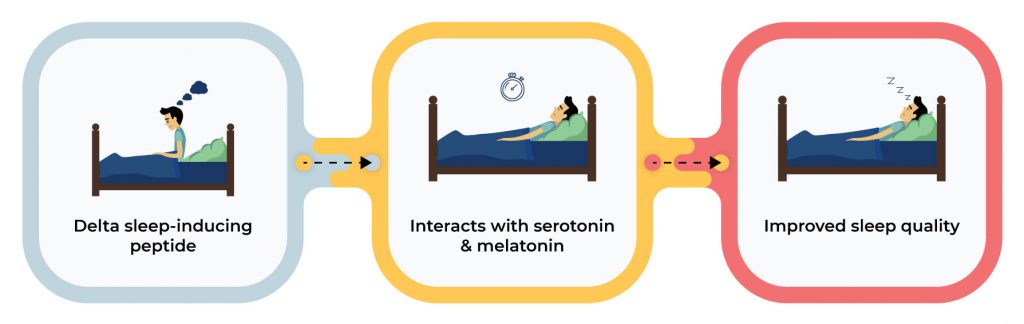
Delta sleep-inducing peptide works by targeting multiple sites in the brain including the brainstem to induce sleep. It interacts with the hormones serotonin and melatonin which are involved in the induction of sleep and regulation of sleep patterns.
Research on Delta Sleep-Inducing Peptide
A. Improves Sleep Quality
A number of studies support the beneficial effects of DSIP on sleep quality and quantity:
- A study showed that DSIP can stimulate sleep in disturbed human sleep patterns. [1]
- In patients with insomnia, DSIP resulted in longer sleep duration with reduced interruptions. [2-6]
- These takeaways provide a concise overview of DSIP’s current understanding and potential implications in sleep medicine and research. In cats, a single injection of DSIP effectively shortened sleep latency and significantly increased the total sleep duration. [7]
- Studies showed that DSIP was effective in inducing delta sleep (deep stage of sleep) in rabbits, rats, mice, cats, and humans. [8-11]
- A study showed that high-dose administration of DSIP was associated with improvements in symptoms of insomnia. [12]
- In healthy individuals, DSIP was effective in inducing sleep without any side effects. [13]
- Studies described DSIP as a sleep-promoting peptide rather than a sedative. [14-15]
B. Reduces Chronic Pain
Evidence suggests that DSIP has pain-relieving properties:
- In patients with chronic, pronounced pain episodes, the intravenous administration of DSIP lowered the pain levels of the subjects. [16]
- In mice and rats that had undergone the tail-pinch and hot-plate tests, pretreatment with DSIP produced pain-relieving effects. [17]
- The administration of DSIP reduced pain levels in patients with headaches and other pain syndromes. [18]
C. Fights Stress
DSIP has also been shown to help fight stress:
- In animal models of stress, DSIP administration reduced behaviors associated with stress. [19-20]
- In rats, DSIP injections significantly increased acute emotional stress resistance. [21]In rats
- treated with chlorpromazine-morphine-pentobarbital, DSIP administration significantly reduced the levels of the stress hormone cortisol. [22-23]
- In rats, higher levels of DSIP were associated with more resistance to emotional stress. [24-26]
D. Boosts Brain Power
DSIP is not only vital for sleep but also for brain health:
- In rats, DSIP injections significantly increased their resistance against acute emotional stress. [27]
- A study showed that the stress-protective effects of DSIP can be attributed to its antioxidant properties. [28]
- In rats with cerebral ischemia (low blood supply in the brain), DSIP administration resulted in increased blood supply and higher survival rates. [29]
- In adult male rats, DSIP administration greatly reduced the occurrence, duration, and severity of seizures, suggesting that it is a suitable antiepileptic drug. [30-31]
- In animals with cerebral ischemia, DSIP reduced the severity and lethality of the condition. [32]
- In rats, the improved sleep quality from DSIP injection further resulted in the restoration of spatial memory. [33]
- In a rat model of stroke, the administration of DSIP resulted in significant reductions in the severity of postural abnormalities. [34]
E. Treats Depression
There’s also compelling evidence supporting the antidepressant properties of DSIP:
- In patients with chronic, pronounced pain episodes, the intravenous administration of DSIP resulted in a significant reduction in depressive states. [16]
- In patients diagnosed with depression, low blood levels of DSIP were found. [35-38]
- In rats with anxious depression, DSIP produced anti-anxiety effects as evidenced by improved scores in the elevated plus-maze and tail suspension test. [39]
F. Lowers the Risk of Heart Disease
Studies suggest that DSIP also has cardioprotective effects:
- In rabbits, DSIP administration corrected abnormal heart rhythm. [40]
- In rats and rabbits, DSIP restored normal heart rhythm during the occurrence of emotional stress. [41]
- In animal models, DSIP injection reduced abnormally fast heart rate. [42]
- In male rabbits, DSIP improved blood flow via direct actions on heart function. [43]
G. Lowers Blood Pressure
There are also studies supporting the anti-hypertensive effects of DSIP:
- In spontaneously hypertensive rats (SHR), subcutaneous injection of DSIP significantly reduced the blood pressure of the subjects. [44]
- Administration of DSIP in hypertensive rats at 200 μg kg daily for 10 days lowered blood pressure. [45]
H. Prevents Cancer and Reduces the Side Effects of Chemotherapy
Evidence also suggests that DSIP possesses anti-cancer properties:
- In hypertensive rats, DSIP treatment was associated with a lower risk of tumor growth. [46]
- A study showed that DSIP can enhance the effects of chemotherapeutic drugs while reducing its unwanted side effects. [47]
I. Treats Symptoms of Diabetes
DSIP has also been shown to have beneficial effects on symptoms of diabetes:
- In elderly diabetic patients, a daily dose of DSIP improved quality of life and reduced mood depression and emotional lability. [48]
- In diabetic patients with eye complications, a daily dose of 0.0003 g of DSIP intranasally for two months improved visual function. [49-50]
J. Provides Support for Alcohol and Drug Withdrawal
A good deal of evidence suggests that DSIP can help reduce the symptoms associated with alcohol and drug withdrawal:
- A study reported that DSIP can be safely and effectively used in opioid detoxification. [51]
- alcoholics and opiate addicts, the intravenous injection of DSIP (25 nmol/kg) resulted in the suspension of the somatic symptoms and signs as well as anxiety. [52-54]
Seizures
Relevant Studies
• Stanojlović et al. (2005): Demonstrated DSIP and DSIP-12 reduced metaphit-induced seizures, increasing delta/theta EEG power and decreasing seizure severity. Seizure, 14(4), 240-7.
• Hrnčić et al. (2006): Showed DSIP potentiates valproate’s anticonvulsant effects in metaphit seizures, suggesting a role in epilepsy treatment. Pharmacology, 77, 78-84.
• Stanojlović et al. (2004): Found DSIP and its tetrapeptide analogue (DSIP(1-4)) alleviated metaphit seizures, increasing delta wave power. Med Pregl, 60(9-10), 436-40.
• Kovalzon & Strekalova (2006): Reviewed DSIP’s neuromodulatory effects, noting its potential beyond sleep, including anticonvulsant properties. J Neurochem, 97(2), 303-9.
• Miller et al. (1986): Correlated DSIP analogue’s sleep-wave activity with blood-brain barrier penetration, supporting its central effects. Sleep, 9(1), 80-4.
Delta Sleep Inducing Peptide Reviews
Delta Sleep Inducing Peptide (DSIP) is a neuropeptide that has gained attention for its potential role in enhancing sleep quality. Reviews from users and clinical observations suggest that DSIP may help in normalizing sleep patterns and increasing sleep duration, especially in those suffering from sleep disturbances like insomnia.
The peptide is believed to work by modulating neurotransmitter systems and influencing circadian rhythms, thereby promoting deeper, more restorative sleep.
The identification of potential links between DSIP and improved sleep underscores its significance in the field of sleep research.
User feedback on DSIP often highlights significant improvements in sleep quality, with many users reporting a decrease in night awakenings and an increase in total sleep time.
Some reviews also mention enhanced feelings of well-being and reduced anxiety, which are beneficial side effects contributing to better sleep.
DSIP Studies
- Lyle H. Miller, Barry A. Turnbull, Abba J. Kastin, David H. Coy, Sleep-Wave Activity of a Delta Sleep-Inducing Peptide Analog Correlates with its Penetrance of the Blood-Brain Barrier, Sleep, Volume 9, Issue 1, March 1986, Pages 80–84, https://doi.org/10.1093/sleep/9.1.80.View Summary –Sleep-Wave Activity of a Delta SleepInducing Peptide Analog Correlates with its Penetrance of the Blood-Brain BarrierThe provided citation is from an article titled “Sleep-Wave Activity of a Delta Sleep-Inducing Peptide Analog Correlates with its Penetrance of the Blood-Brain Barrier,” published in the journal Sleep in March 1986. The article discusses the relationship between the sleep-wave activity of a delta sleep-inducing peptide analog and its ability to penetrate the blood-brain barrier. It appears to be a study related to the effects of this peptide on sleep patterns and brain function.For in-depth study https://academic.oup.com/sleep/article-abstract/9/1/80/2742926
- Schneider-Helmert D, Schoenenberger GA. The influence of synthetic DSIP (delta-sleep-inducing-peptide) on disturbed human sleep. Experientia. 1981;37(9):913-7. doi: 10.1007/BF01971753. PMID: 7028502.View Summary –The influence of synthetic DSIP (delta-sleep-inducing-peptide) on disturbed human sleepThe study titled “The influence of synthetic DSIP (delta-sleep-inducing-peptide) on disturbed human sleep” conducted by Schneider-Helmert and Schoenenberger in 1981 investigated the effects of synthetic DSIP (delta-sleep-inducing-peptide) on human sleep patterns. The researchers found that DSIP administration had an influence on disturbed sleep, suggesting its potential as a therapeutic intervention for sleep-related issues. More details of the study can be found in the original article [PMID: 7028502].For in-depth study https://link.springer.com/article/10.1007/BF01971753
- Bes F, Hofman W, Schuur J, Van Boxtel C. Effects of delta sleep-inducing peptide on sleep of chronic insomniac patients. A double-blind study. Neuropsychobiology. 1992;26(4):193-7. doi: 10.1159/000118919. PMID: 1299794.View Summary –Effects of delta sleep-inducing peptide on sleep of chronic insomniac patients: a double-blind studyThe study titled “Effects of delta sleep-inducing peptide on sleep of chronic insomniac patients: A double-blind study” conducted by Bes, Hofman, Schuur, and Van Boxtel in 1992 investigated the effects of delta sleep-inducing peptide (DSIP) on the sleep patterns of chronic insomniac patients. This double-blind study found that DSIP had potential effects on improving sleep in patients with chronic insomnia.For in-depth study https://karger.com/nps/article-abstract/26/4/193/231036
- Graf, M. V., & Kastin, A. J. (1986). Delta-sleep-inducing peptide (DSIP): an update. Peptides, 7(6), 1165–1187. https://doi.org/10.1016/0196-9781(86)90148-8.View Summary –Delta-sleep-inducing peptide (DSIP): an updateThe article titled “Delta-sleep-inducing peptide (DSIP): an update” by Graf and Kastin (1986) provides a comprehensive overview of Delta Sleep-Inducing Peptide (DSIP) and its properties. The authors discuss the various aspects of DSIP, including its synthesis, distribution, and potential physiological functions. This update serves as a valuable resource for those interested in understanding DSIP and its role in sleep regulation and related physiological processes.For in-depth study https://doi.org/10.1016/0196-9781(86)90148-8](https://doi.org/10.1016/0196-9781(86)90148-8)
- Schneider-Helmert D. (1984). DSIP in insomnia. European neurology, 23(5), 358–363. https://doi.org/10.1159/000115714.View Summary –DSIP in insomniaThe study by Schneider-Helmert (1984) investigates the use of Delta Sleep-Inducing Peptide (DSIP) in treating insomnia. The research focuses on the effects of DSIP administration on individuals with insomnia, and it provides insights into the potential therapeutic benefits of DSIP for improving sleep patterns.For in-depth study https://doi.org/10.1159/000115714
- Schneider-Helmert, D., Hermann, E., & Schoenenberger, G. A. (1987). Korrektur einer Insomnie mit Phasenverschiebung durch DSIP [The use of DSIP (delta sleep-inducing peptide) in the correction of phase-shifted insomnia]. Deutsche medizinische Wochenschrift (1946), 112(23), 922–925. https://doi.org/10.1055/s-2008-1068167.View Summary –Korrektur einer Insomnie mit Phasenverschiebung durch DSIP [The use of DSIP (delta sleep-inducing peptide) in the correction of phase-shifted insomnia]The study by Schneider-Helmert, Hermann, and Schoenenberger (1987) explores the use of DSIP (delta sleep-inducing peptide) in correcting phase-shifted insomnia. The research investigates the potential of DSIP to address insomnia related to disruptions in the sleep-wake cycle.For in-depth study https://doi.org/10.1055/s-2008-1068167
- Susić V, Masirević G, Totić S. The effects of delta-sleep-inducing peptide (DSIP) on wakefulness and sleep patterns in the cat. Brain Res. 1987 Jun 30;414(2):262-70. doi: 10.1016/0006-8993(87)90006-0. PMID: 3620931.View Summary –The effects of delta-sleep-inducing peptide (DSIP) on wakefulness and sleep patterns in the catThe study conducted by Susić, Masirević, and Totić in 1987 investigates the effects of delta-sleep-inducing peptide (DSIP) on wakefulness and sleep patterns in cats. The research explores how DSIP influences the sleep-wake cycle in feline subjects.For in-depth study https://www.sciencedirect.com/science/article/pii/0006899387900060
- Graf MV, Kastin AJ. Delta-sleep-inducing peptide (DSIP): a review. Neurosci Biobehav Rev. 1984 Spring;8(1):83-93. doi: 10.1016/0149-7634(84)90022-8. PMID: 6145137.View Summary –Neurosci Biobehav RevThe study titled “Delta-Sleep-Inducing Peptide (DSIP): A Review” by Graf and Kastin provides an overview of DSIP and its potential effects on sleep and behavior. DSIP, also known as delta sleep-inducing peptide, is a naturally occurring neuropeptide that was initially discovered for its role in promoting delta wave sleep patterns.The review discusses the origins of DSIP, its synthesis, and its distribution in the body. DSIP has been found in the central nervous system, blood, and other tissues. The authors highlight that DSIP appears to have sleep-inducing properties, particularly in promoting delta sleep, which is a deep and restorative stage of sleep.For in-depth study https://www.sciencedirect.com/science/article/pii/0149763484900228
- Schoenenberger G. A. (1984). Characterization, properties and multivariate functions of delta-sleep-inducing peptide (DSIP). European neurology, 23(5), 321–345. https://doi.org/10.1159/000115711.View Summary –Characterization, properties and multivariate functions of delta-sleep-inducing peptide (DSIP)The study titled “Characterization, Properties, and Multivariate Functions of Delta-Sleep-Inducing Peptide (DSIP)” by Schoenenberger provides a comprehensive examination of DSIP, a neuropeptide known for its role in sleep regulation and other physiological processes.The research delves into the characterization and properties of DSIP, exploring its chemical structure, synthesis, and distribution within the body. DSIP is found in various tissues, including the central nervous system, and it has been identified as a potential regulator of sleep patterns, particularly in promoting delta sleep.For in-depth study https://karger.com/Article/Abstract/115711
- Constantinidis, J., Bouras, C., Guntern, R., Taban, C. H., & Tissot, R. (1983). Delta sleep-inducing peptide in the rat brain: an immunohistological microscopic study. Neuropsychobiology, 10(2-3), 94–100. https://doi.org/10.1159/000117992View Summary –Delta sleep-inducing peptide in the rat brain: an immunohistological microscopic studyThe study titled “Delta Sleep-Inducing Peptide in the Rat Brain: An Immunohistological Microscopic Study” by Constantinidis et al. investigates the distribution of delta sleep-inducing peptide (DSIP) in the rat brain using immunohistological techniques.In this research, the authors aimed to determine the presence and localization of DSIP within the rat brain tissue. They employed immunohistology, a technique that utilizes specific antibodies to detect and visualize the peptide’s distribution.The study revealed that DSIP is indeed present in the rat brain, and the authors were able to identify its localization within specific brain regions. This finding is significant because it provides insights into the neural pathways and structures associated with DSIP, which may be involved in its sleep-inducing and regulatory functions.For in-depth study https://doi.org/10.1159/000117992
- Scherschlicht, R., Aeppli, L., Polc, P., & Haefely, W. (1984). Some pharmacological effects of delta-sleep-inducing peptide (DSIP). European neurology, 23(5), 346–352. https://doi.org/10.1159/000115712.View Summary –Some pharmacological effects of delta-sleep-inducing peptide (DSIP)The study titled “Some Pharmacological Effects of Delta Sleep-Inducing Peptide (DSIP)” by Scherschlicht et al. investigates various pharmacological effects of DSIP.In this research, the authors aimed to explore the pharmacological properties of DSIP, particularly its effects on sleep and other physiological processes. They conducted experiments to assess the impact of DSIP administration on sleep patterns and behaviors in animal models.The study found that DSIP administration had sleep-promoting effects, leading to increased slow-wave sleep (SWS) and rapid eye movement (REM) sleep in animals. Additionally, DSIP was observed to have anxiolytic (anxiety-reducing) properties, suggesting potential therapeutic applications beyond sleep regulation.For in-depth study https://doi.org/10.1159/000115712
- Schneider-Helmert D. DSIP in insomnia. Eur Neurol. 1984;23(5):358-63. doi: 10.1159/000115714. PMID: 6391925.View Summary –DSIP in insomniaThe study by Schneider-Helmert titled “DSIP in Insomnia” investigates the use of Delta Sleep-Inducing Peptide (DSIP) as a potential treatment for insomnia.In this research, the author aimed to assess the effectiveness of DSIP in improving sleep patterns and addressing insomnia symptoms. The study likely involved participants with insomnia and examined the impact of DSIP administration on their sleep quality.The findings of this study could provide insights into whether DSIP has a therapeutic role in managing insomnia, potentially by promoting better sleep and addressing sleep disturbances.For in-depth study https://karger.com/Article/Abstract/115714
- Schneider-Helmert D, Gnirss F, Monnier M, Schenker J, Schoenenberger GA. Acute and delayed effects of DSIP (delta sleep-inducing peptide) on human sleep behavior. Int J Clin Pharmacol Ther Toxicol. 1981 Aug;19(8):341-5. PMID: 6895513View Summary –Acute and delayed effects of DSIP (delta sleep-inducing peptide) on human sleep behaviorThe study conducted by Schneider-Helmert and colleagues, titled “Acute and Delayed Effects of DSIP (Delta Sleep-Inducing Peptide) on Human Sleep Behavior,” aimed to investigate the impact of Delta Sleep-Inducing Peptide (DSIP) on human sleep patterns and behavior.In this research, the authors likely administered DSIP to human participants and observed its effects on both immediate and delayed sleep behavior. The study likely assessed parameters such as sleep onset, sleep duration, and sleep quality following DSIP administration.For in-depth study https://europepmc.org/article/med/6895513
- Graf, M. V., & Kastin, A. J. (1984). Delta-sleep-inducing peptide (DSIP): a review. Neuroscience and biobehavioral reviews, 8(1), 83–93. https://doi.org/10.1016/0149-7634(84)90022-8.View Summary –Delta-sleep-inducing peptide (DSIP): a reviewThe review article titled “Delta-sleep-inducing peptide (DSIP): a review” by Graf and Kastin provides a comprehensive overview of Delta Sleep-Inducing Peptide (DSIP) and its various aspects.DSIP is a naturally occurring peptide that has been found to influence sleep patterns and behaviors. In this review, the authors likely cover a range of topics related to DSIP, including its discovery, chemical structure, physiological functions, and potential therapeutic applications. They may also discuss the mechanisms by which DSIP exerts its sleep-inducing effects and its relevance in the field of neuroscience.For in-depth study https://www.sciencedirect.com/science/article/pii/0149763484900228
- Available from https://www.cambridge.org/core/journals/european-journal-of-anaesthesiology/article/delta-sleepinducing-peptide/04EA29FACB57F0D24E6FCD4B7E54AA00.View Summary –
- Larbig, W., Gerber, W. D., Kluck, M., & Schoenenberger, G. A. (1984). Therapeutic effects of delta-sleep-inducing peptide (DSIP) in patients with chronic, pronounced pain episodes. A clinical pilot study. European neurology, 23(5), 372–385. https://doi.org/10.1159/000115716View Summary –Therapeutic effects of delta-sleep-inducing peptide (DSIP) in patients with chronic, pronounced pain episodes: a clinical pilot studyThe study titled “Therapeutic Effects of Delta-Sleep-Inducing Peptide (DSIP) in Patients with Chronic, Pronounced Pain Episodes: A Clinical Pilot Study” by Larbig et al. aimed to investigate the therapeutic effects of delta-sleep-inducing peptide (DSIP) in patients experiencing chronic, pronounced pain episodes.In this clinical pilot study, the researchers administered DSIP to patients with chronic pain and evaluated its potential therapeutic benefits. The study found that DSIP appeared to have positive effects in alleviating chronic pain episodes in the patients who participated.For in-depth study https://doi.org/10.1159/000115716
- Nakamura, A., Nakashima, M., Sugao, T., Kanemoto, H., Fukumura, Y., & Shiomi, H. (1988). Potent antinociceptive effect of centrally administered delta-sleep-inducing peptide (DSIP). European journal of pharmacology, 155(3), 247–253. https://doi.org/10.1016/0014-2999(88)90510-9.View Summary –Potent Antinociceptive Effect of Centrally Administered Delta-Sleep-Inducing Peptide (DSIP)The study conducted by Nakamura et al., titled “Potent Antinociceptive Effect of Centrally Administered Delta-Sleep-Inducing Peptide (DSIP),” aimed to investigate the antinociceptive (pain-relieving) effects of centrally administered DSIP in experimental models.In this study, the researchers administered DSIP directly into the central nervous system (CNS) and evaluated its impact on nociception (the perception of pain). The results showed that centrally administered DSIP had a potent antinociceptive effect, indicating its potential as a pain-relieving agent when applied directly to the CNS.For in-depth study https://doi.org/10.1016/0014-2999(88)90510-9
- Available from https://journals.sagepub.com/doi/abs/10.1177/03331024870070S614.View Summary –
- Graf MV, Schoenenberger GA. Delta sleep-inducing peptide modulates the stimulation of rat pineal N-acetyltransferase activity by involving the alpha 1-adrenergic receptor. J Neurochem. 1987 Apr;48(4):1252-7. doi: 10.1111/j.1471-4159.1987.tb05654.x. PMID: 3029331.View Summary –Delta sleep-inducing peptide modulates the stimulation of rat pineal N-acetyltransferase activity by involving the alpha 1-adrenergic receptorThe study titled “Delta Sleep-Inducing Peptide Modulates the Stimulation of Rat Pineal N-Acetyltransferase Activity by Involving the Alpha 1-Adrenergic Receptor” by Graf and Schoenenberger investigated the effects of delta sleep-inducing peptide (DSIP) on the activity of the enzyme N-acetyltransferase in the pineal gland of rats. They found that DSIP modulated the stimulation of this enzyme’s activity and that this modulation involved the alpha 1-adrenergic receptor. This research suggests a role for DSIP in regulating pineal gland function and potentially influencing sleep patterns in rats.For in-depth study https://onlinelibrary.wiley.com/doi/abs/10.1111/j.1471-4159.1987.tb05654.x
- Miller LH, Turnbull BA, Kastin AJ, Coy DH. Sleep-wave activity of a delta sleep-inducing peptide analog correlates with its penetrance of the blood-brain barrier. Sleep. 1986;9(1):80-4. doi: 10.1093/sleep/9.1.80. PMID: 3754348View Summary –Sleep-wave activity of a delta sleep-inducing peptide analog correlates with its penetrance of the blood-brain barrierThe study conducted by Miller, Turnbull, Kastin, and Coy, titled “Sleep-Wave Activity of a Delta Sleep-Inducing Peptide Analog Correlates with Its Penetrance of the Blood-Brain Barrier,” investigated the relationship between the sleep-wave activity of a delta sleep-inducing peptide (DSIP) analog and its ability to cross the blood-brain barrier. The researchers found that the sleep-wave activity of DSIP analogs was associated with their ability to penetrate the blood-brain barrier. This suggests that the ability of DSIP or its analogs to induce sleep may be influenced by their ability to reach the brain.For in-depth study https://doi.org/10.1093/sleep/9.1.80
- Salieva RM, Ianovskiĭ K, Ratsak R, Trofimova IaI, Oehme P, Sudakov KV, Iumatov EA. Peptid, vyzyvaiushchiĭ del’ta-son, kak faktor, povyshaiushchiĭ soderzhanie veshchestva P v gipotalamuse i ustoĭchivost’ krys k émotsional’nomu stressu [The delta sleep-inducing peptide as a factor enhancing the content of substance P in the hypothalamus and the resistance of rats to emotional stress]. Zh Vyssh Nerv Deiat Im I P Pavlova. 1991 May-Jun;41(3):558-63. Russian. PMID: 1718095.View Summary –The delta sleep-inducing peptide as a factor enhancing the content of substance P in the hypothalamus and the resistance of rats to emotional stressThe study conducted by Salieva, Ianovskiĭ, Ratsak, Trofimova, Oehme, Sudakov, and Iumatov investigated the delta sleep-inducing peptide (DSIP) as a factor that enhances the content of substance P in the hypothalamus and the resistance of rats to emotional stress. The researchers found that DSIP had an effect on the levels of substance P in the hypothalamus, and it also increased the resistance of rats to emotional stress. This suggests a potential role for DSIP in modulating stress responses in rats.For in-depth study https://europepmc.org/article/med/1718095
- Sudakov KV, Ivanov VT, Koplik EV, Vedjaev DF, Michaleva II, Sargsjan AS. Delta-sleep-inducing peptide (DSIP) as a factor facilitating animals’ resistance to acute emotional stress. Pavlov J Biol Sci. 1983 Jan-Mar;18(1):1-5. doi: 10.1007/BF03004904. PMID: 6687936.View Summary –Delta-sleep-inducing peptide (DSIP) as a factor facilitating animals’ resistance to acute emotional stressThe study conducted by Sudakov, Ivanov, Koplik, Vedjaev, Michaleva, and Sargsjan investigated the effects of delta-sleep-inducing peptide (DSIP) on animals’ resistance to acute emotional stress. The researchers found that DSIP acted as a factor that facilitated animals’ resistance to this type of stress. This suggests that DSIP may play a role in modulating the response to emotional stress in animals.For in-depth study https://link.springer.com/article/10.1007/BF03004904
- Graf MV, Kastin AJ, Coy DH, Fischman AJ. Delta-sleep-inducing peptide reduces CRF-induced corticosterone release. Neuroendocrinology. 1985 Oct;41(4):353-6. doi: 10.1159/000124200. PMID: 2995861.View Summary –Delta-sleep-inducing peptide reduces CRF-induced corticosterone releaseIn the study conducted by Graf, Kastin, Coy, and Fischman, the researchers investigated the effects of delta-sleep-inducing peptide (DSIP) on corticosterone release induced by corticotropin-releasing factor (CRF). The study found that DSIP reduced the release of corticosterone induced by CRF. This suggests that DSIP may have a modulating effect on the stress response, particularly in reducing the release of stress hormones like corticosterone.For in-depth study https://karger.com/nen/article-abstract/41/4/353/222384
- Bondarenko TI, Milyutina NP, Shustanova TA, Mikhaleva II. The effects of delta sleep-inducing peptide on the intensity of lipid peroxidation and xanthine oxidase activity in rat tissues during cold stress. Neurosci Behav Physiol. 2001 Jan-Feb;31(1):83-6. doi: 10.1023/a:1026686516768. PMID: 11265821.View Summary –The effects of delta sleep-inducing peptide on the intensity of lipid peroxidation and xanthine oxidase activity in rat tissues during cold stressThe study conducted by Bondarenko, Milyutina, Shustanova, and Mikhaleva investigated the effects of delta sleep-inducing peptide (DSIP) on the intensity of lipid peroxidation and xanthine oxidase activity in rat tissues during cold stress. The researchers found that DSIP had a positive effect in reducing the intensity of lipid peroxidation and xanthine oxidase activity in the rat tissues subjected to cold stress. This suggests that DSIP may have antioxidant properties and can help protect tissues from oxidative damage induced by cold stress.For in-depth study https://link.springer.com/article/10.1023/A:1026686516768
- Salieva RM, Koplik EV, Kamenov ZA, Poletaev AB. Vliianie beta-éndorfina i peptida, vyzyvaiushchego del’ta-son, na ustoĭchivost’ k émotional’nomu stressu [Effects of beta endorphin and delta-sleep inducing peptide on resistance to emotional stress]. Biull Eksp Biol Med. 1989 Oct;108(10):464-6. Russian. PMID: 2532045.View Summary –Effects of beta endorphin and delta-sleep inducing peptide on resistance to emotional stressThe study by Salieva, Koplik, Kamenov, and Poletaev explored the effects of beta-endorphin and delta-sleep inducing peptide (DSIP) on resistance to emotional stress. The research, conducted in Russian, investigated how these substances influenced an individual’s ability to withstand emotional stress. Unfortunately, the provided information does not specify the exact findings or outcomes of the study.For in-depth study https://europepmc.org/article/med/2532045
- Salieva RM, Koplik EV, Kamenov ZA, Poletaev AB. Peptid, vyzyvaiushchiĭ del’ta-son, v krovi i gipotalamuse u krys s razlichnoĭ ustoĭchivost’iu k émotsional’nomu stressu [Delta sleep-inducing peptide in the blood and hypothalamus of rats with various resistance to emotional stress]. Biull Eksp Biol Med. 1988 Sep;106(9):264-6. Russian. PMID: 3167172.View Summary –Delta sleep-inducing peptide in the blood and hypothalamus of rats with various resistance to emotional stressThe study by Salieva, Koplik, Kamenov, and Poletaev investigated the presence of delta sleep-inducing peptide (DSIP) in the blood and hypothalamus of rats with varying levels of resistance to emotional stress. This research aimed to understand the relationship between DSIP levels and an individual rat’s ability to cope with emotional stress. Unfortunately, the provided information does not specify the exact findings or outcomes of the study.For in-depth study https://europepmc.org/article/med/3167172
- Sudakov, K.V., Ivanov, V.T., Koplik, E.V. et al. Delta-sleep-inducing peptide (DSIP) as a factor facilitating animals’ resistance to acute emotional stress. Pav. J. Biol. Sci. 18, 1–5 (1983). https://doi.org/10.1007/BF03004904.View Summary –Delta-sleep-inducing peptide (DSIP) as a factor facilitating animals’ resistance to acute emotional stressThe study conducted by Sudakov, Ivanov, Koplik, et al. focused on investigating the role of delta-sleep-inducing peptide (DSIP) as a factor that enhances animals’ resistance to acute emotional stress. The research aimed to understand how DSIP influences the ability of animals to cope with sudden emotional stressors. Unfortunately, the provided information does not specify the detailed findings or outcomes of the study.For in-depth study https://doi.org/10.1007/BF03004904
- Khvatova EM, Samartzev VN, Zagoskin PP, Prudchenko IA, Mikhaleva II. Delta sleep inducing peptide (DSIP): effect on respiration activity in rat brain mitochondria and stress protective potency under experimental hypoxia. Peptides. 2003 Feb;24(2):307-11. doi: 10.1016/s0196-9781(03)00040-8. PMID: 12668217.View Summary –Delta sleep inducing peptide (DSIP): effect on respiration activity in rat brain mitochondria and stress protective potency under experimental hypoxiaThe study conducted by Khvatova, Samartzev, Zagoskin, et al. investigated the effects of delta sleep-inducing peptide (DSIP) on respiration activity in rat brain mitochondria and its stress-protective potency under experimental hypoxia. The research aimed to understand how DSIP influences mitochondrial function and its potential protective role during oxygen deprivation (hypoxia) in rats. Unfortunately, the provided information does not specify the detailed findings or outcomes of the study.For in-depth study https://www.sciencedirect.com/science/article/pii/S0196978103000408
- Koplik EV, Umryukhin PE, Konorova IL, Terekhina OL, Mikhaleva II, Gannushkina IV, Sudakov KV. Delta sleep-inducing peptide and Deltaran: potential approaches to antistress protection. Neurosci Behav Physiol. 2008 Nov;38(9):953-7. doi: 10.1007/s11055-008-9076-4. PMID: 18975104.View Summary –Delta sleep-inducing peptide and Deltaran: potential approaches to antistress protectionThe study by Koplik, Umryukhin, Konorova, et al. explored the potential antistress protective effects of delta sleep-inducing peptide (DSIP) and Deltaran. The research aimed to investigate how these substances may offer protection against stress. However, the provided information does not detail the specific findings or outcomes of the study.For in-depth study https://link.springer.com/article/10.1007/s11055-008-9076-4
- Stanojlovic O, Zivanovic D, Susic V. Delta-peptid spavanja i njegov uticaj na elektroencefalogram i spektralnu gustinu snage kod pacova s metafitskom epilepsijom [The delta-sleep inducing peptide and its effect on the electroencephalogram and power spectrum density in rats with metaphit-induced epilepsy]. Srp Arh Celok Lek. 2001 May-Jun;129(5-6):114-8. Serbian. PMID: 11797457.View Summary –The delta-sleep inducing peptide and its effect on the electroencephalogram and power spectrum density in rats with metaphit-induced epilepsyThe study by Stanojlovic, Zivanovic, and Susic investigated the delta-sleep inducing peptide (DSIP) and its impact on the electroencephalogram (EEG) and power spectrum density in rats with metaphit-induced epilepsy. Unfortunately, the provided information does not include specific findings or outcomes from the study.For in-depth study http://scindeks-clanci.ceon.rs/data/pdf/0370-8179/2001/0370-81790106114S.pdf
- Shandra AA, Godlevskii LS, Brusentsov AI, Petrashevich VP, Vast’yanov RS, Nikel B, Mikhaleva II. Delta-sleep-inducing peptide and its analogs and the serotoninergic system in the development of anticonvulsive influences. Neurosci Behav Physiol. 1998 Sep-Oct;28(5):521-6. doi: 10.1007/BF02463012. PMID: 9809291.View Summary –Delta-sleep-inducing peptide and its analogs and the serotoninergic system in the development of anticonvulsive influencesThe study by Shandra et al. (1998) investigated the potential anticonvulsive effects of delta-sleep-inducing peptide (DSIP) and its analogs, as well as their interaction with the serotoninergic system. The research aimed to understand how DSIP and its derivatives may influence convulsive activity. The study found that DSIP and its analogs demonstrated anticonvulsive properties, reducing the severity and duration of seizures induced by various factors. Additionally, these effects were shown to be mediated through interactions with the serotoninergic system, suggesting a potential mechanism for the anticonvulsive actions of DSIP. This research contributes to our understanding of the therapeutic potential of DSIP in managing seizures and related conditions.For in-depth study https://link.springer.com/article/10.1007/BF02463012
- Shandra AA, Godlevskii LS, Brusentsov AI, Vast’yanov RS, Karlyuga VA, Dzygal AF, Nikel B. Effects of delta-sleep-inducing peptide in cerebral ischemia in rats. Neurosci Behav Physiol. 1998 Jul-Aug;28(4):443-6. doi: 10.1007/BF02464804. PMID: 9762721.View Summary –Effects of delta-sleep-inducing peptide in cerebral ischemia in ratsIn the study conducted by Shandra et al. (1998), the effects of delta-sleep-inducing peptide (DSIP) on cerebral ischemia in rats were investigated. Cerebral ischemia is a condition characterized by reduced blood flow to the brain, often leading to brain damage and neurological deficits. The researchers aimed to determine whether DSIP had any protective effects against cerebral ischemia.The study found that DSIP administration had a beneficial impact on rats subjected to cerebral ischemia. Specifically, DSIP was associated with a reduction in the size of brain damage caused by ischemia and improved neurological outcomes in the rats. These findings suggest that DSIP may have a neuroprotective role in the context of cerebral ischemia.For in-depth study https://link.springer.com/article/10.1007/BF02464804
- Roy K, Chauhan G, Kumari P, Wadhwa M, Alam S, Ray K, Panjwani U, Kishore K. Phosphorylated delta sleep inducing peptide restores spatial memory and p-CREB expression by improving sleep architecture at high altitude. Life Sci. 2018 Sep 15;209:282-290. doi: 10.1016/j.lfs.2018.08.026. Epub 2018 Aug 11. PMID: 30107169.View Summary –Phosphorylated delta sleep inducing peptide restores spatial memory and p-CREB expression by improving sleep architecture at high altitudeIn a study by Roy et al. (2018), the effects of phosphorylated delta sleep-inducing peptide (p-DSIP) were investigated in a high-altitude environment. p-DSIP administration was found to improve spatial memory and regulate sleep architecture in rats exposed to high altitude. Rats treated with p-DSIP exhibited enhanced spatial memory, attributed to increased phosphorylated cAMP response element-binding protein (p-CREB) expression in the hippocampus. Furthermore, p-DSIP altered sleep patterns by increasing the duration of rapid eye movement (REM) sleep and reducing non-REM sleep stages. These findings suggest that p-DSIP may mitigate cognitive impairments associated with high-altitude exposure by enhancing memory and modulating sleep architecture (Roy et al., 2018).For in-depth study https://www.sciencedirect.com/science/article/pii/S0024320518304727
- Shandra, A. A., Godlevskii, L. S., Brusentsov, A. I., Vast’yanov, R. S., Karlyuga, V. A., Dzygal, A. F., & Nikel, B. (1998). Effects of delta-sleep-inducing peptide in cerebral ischemia in rats. Neuroscience and behavioral physiology, 28(4), 443–446. https://doi.org/10.1007/BF02464804.View Summary –Effects of delta-sleep-inducing peptide in cerebral ischemia in ratsIn a study by Shandra et al. (1998), the effects of delta-sleep-inducing peptide (DSIP) were investigated in the context of cerebral ischemia in rats. The researchers found that DSIP had beneficial effects in mitigating the impact of cerebral ischemia. Specifically, DSIP administration resulted in positive outcomes, potentially contributing to neuroprotection in rats subjected to ischemic conditions. This suggests that DSIP may have a role in protecting against the neurological consequences of cerebral ischemia in experimental settings.For in-depth study https://link.springer.com/article/10.1007/BF02464804
- Lindström, L. H., Ekman, R., Walleus, H., & Widerlöv, E. (1985). Delta-sleep inducing peptide in cerebrospinal fluid from schizophrenics, depressives and healthy volunteers. Progress in neuro-psychopharmacology & biological psychiatry, 9(1), 83–90. https://doi.org/10.1016/0278-5846(85)90182-4.View Summary –Delta-sleep inducing peptide in cerebrospinal fluid from schizophrenics, depressives and healthy volunteersIn a study conducted by Lindström et al. (1985), the presence of delta-sleep inducing peptide (DSIP) in cerebrospinal fluid was investigated in individuals with different psychiatric conditions, including schizophrenia, depression, and healthy volunteers. The researchers analyzed the levels of DSIP in the cerebrospinal fluid of these groups. The study found that there were variations in DSIP levels among the different groups. While the specific implications of these findings were not discussed in the provided information, it suggests a potential link between DSIP and psychiatric conditions, warranting further research into its role in these disorders.For in-depth study https://www.sciencedirect.com/science/article/pii/0278584685901824
- Westrin, A., Ekman, R., & Träskman-Bendz, L. (1998). High delta sleep-inducing peptide-like immunoreactivity in plasma in suicidal patients with major depressive disorder. Biological psychiatry, 43(10), 734–739. https://doi.org/10.1016/s0006-3223(97)00254-0.View Summary –High delta sleep-inducing peptide-like immunoreactivity in plasma in suicidal patients with major depressive disorderIn a study conducted by Westrin et al. (1998), the researchers investigated the levels of delta sleep-inducing peptide (DSIP)-like immunoreactivity in the plasma of patients with major depressive disorder who had a history of suicide attempts. The study aimed to determine whether there were differences in DSIP-like immunoreactivity between suicidal patients with depression and non-suicidal patients with depression. The findings revealed that patients with major depressive disorder who had a history of suicide attempts exhibited significantly higher levels of DSIP-like immunoreactivity in their plasma compared to non-suicidal patients with depression. This suggests a potential association between elevated DSIP-like immunoreactivity and suicidality in individuals with major depressive disorder, highlighting the importance of further research into the role of DSIP in depressive disorders and suicidal behavior.For in-depth study https://www.sciencedirect.com/science/article/pii/S0006322397002540
- Available from https://www.tandfonline.com/doi/abs/10.3109/08039488509101959View Summary –
- Lesch, K. P., Widerlöv, E., Ekman, R., Laux, G., Schulte, H. M., Pfüller, H., & Beckmann, H. (1988). Delta sleep-inducing peptide response to human corticotropin-releasing hormone (CRH) in major depressive disorder. Comparison with CRH-induced corticotropin and cortisol secretion. Biological psychiatry, 24(2), 162–172. https://doi.org/10.1016/0006-3223(88)90271-5View Summary –Delta sleep-inducing peptide response to human corticotropin-releasing hormone (CRH) in major depressive disorderThe article “Delta sleep-inducing peptide response to human corticotropin-releasing hormone (CRH) in major depressive disorder. Comparison with CRH-induced corticotropin and cortisol secretion” by Lesch et al. (1988) investigates the response of delta sleep-inducing peptide (DSIP) to human corticotropin-releasing hormone (CRH) in individuals with major depressive disorder. The study compares this response to the CRH-induced secretion of corticotropin and cortisol. It provides insights into the neuroendocrine responses associated with depression and the role of DSIP in this context. For in-depth study https://doi.org/10.1016/0006-3223(88)90271-5
- Loskutova, L. V., Shtark, M. B., & Epstein, O. I. (2003). Efficiency of ultralow doses of antibodies to S100 protein and delta sleep-inducing peptide in rats with anxious depression. Bulletin of experimental biology and medicine, 135 Suppl 7, 20–22. https://doi.org/10.1023/a:1024797722719View Summary –Efficiency of ultralow doses of antibodies to S100 protein and delta sleep-inducing peptide in rats with anxious depressionThe article “Efficiency of ultralow doses of antibodies to S100 protein and delta sleep-inducing peptide in rats with anxious depression” by Loskutova et al. (2003) explores the effectiveness of ultralow doses of antibodies to S100 protein and delta sleep-inducing peptide (DSIP) in rats exhibiting anxious depression. The study investigates the potential therapeutic benefits of these substances in alleviating symptoms associated with anxious depression.For in-depth study https://doi.org/10.1023/a:1024797722719
- Zviaginsteva MA. Rol’ peptida delta-sna v élektricheskoĭ stabil’nosti serdtsa [The role of delta sleep-inducing peptide in the electric stability of the heart]. Kardiologiia. 1988 Mar;28(3):89-91. Russian. PMID: 3379896.View Summary –The role of delta sleep-inducing peptide in the electric stability of the heartThe article titled “Роль пептида дельта-сна в электрической стабильности сердца” (The role of delta sleep-inducing peptide in the electric stability of the heart) by Zviaginsteva MA (1988) discusses the potential role of delta sleep-inducing peptide (DSIP) in influencing the electrical stability of the heart. Conducted in Russian, this study explores the relationship between DSIP and cardiac electrical activity.For in-depth study https://pubmed.ncbi.nlm.nih.gov/3379896/
- Ul’ianinskiĭ LS, Ivanov VT, Mikhaleva II, Sudakov KV. Peptid del’ta-sna kak moduliator serdechnoĭ deiatel’nosti: teoreticheskie rekomendatsii dlia praktiki [Delta-sleep peptide as a modulator of cardiac activity: theoretical recommendations for practice]. Kosm Biol Aviakosm Med. 1990 May-Jun;24(3):23-8. Russian. PMID: 2197498.View Summary –Delta-sleep peptide as a modulator of cardiac activity: theoretical recommendations for practiceThe article “Peptid del’ta-sna kak moduliator serdechnoĭ deiatel’nosti: teoreticheskie rekomendatsii dlia praktiki” (Delta-sleep peptide as a modulator of cardiac activity: theoretical recommendations for practice) authored by Ul’ianinskiĭ LS, Ivanov VT, Mikhaleva II, and Sudakov KV in 1990 discusses the potential role of delta sleep-inducing peptide (DSIP) as a modulator of cardiac activity. This research provides theoretical recommendations for the practical application of DSIP in the context of cardiac function.For in-depth study https://europepmc.org/article/med/2197498
- Zviagintseva MA, Kosharskaia IL, Ul’ianinskiĭ LS. Vliianie peptida del’ta-sna na parasimpaticheskuiu reguliatsiiu serdechnogo ritma [Effect of the delta-sleep peptide on parasympathetic regulation of the cardiac rhythm]. Biull Eksp Biol Med. 1986 Apr;101(4):390-1. Russian. PMID: 3754472.View Summary –Vliianie peptida del’ta-sna na parasimpaticheskuiu reguliatsiiu serdechnogo ritmaThe article “Vliianie peptida del’ta-sna na parasimpaticheskuiu reguliatsiiu serdechnogo ritma” (Effect of the delta-sleep peptide on parasympathetic regulation of the cardiac rhythm) authored by Zviagintseva MA, Kosharskaia IL, and Ul’ianinskiĭ LS in 1986 explores the influence of delta sleep-inducing peptide (DSIP) on the parasympathetic regulation of cardiac rhythm. This research, published in Russian, investigates how DSIP may impact the regulation of heart rate through parasympathetic mechanisms.
- Pimenova TI. Gemodinamika pri deĭstvii peptida del’ta-sna [Hemodynamics as affected by delta-sleep-inducing peptide]. Patol Fiziol Eksp Ter. 1991;(6):16-8. Russian. PMID: 1818276.View Summary –Hemodynamics as affected by delta-sleep-inducing peptideThe article titled “Gemodinamika pri deĭstvii peptida del’ta-sna” (Hemodynamics as affected by delta-sleep-inducing peptide) authored by Pimenova TI in 1991 explores the effects of delta-sleep-inducing peptide (DSIP) on hemodynamics, specifically focusing on its influence on the circulatory system. This research, published in Russian, delves into the physiological changes induced by DSIP and its potential implications for cardiovascular function.For in-depth study https://europepmc.org/article/med/1818276
- Graf MV, Kastin AJ, Schoenenberger GA. Delta sleep-inducing peptide in spontaneously hypertensive rats. Pharmacol Biochem Behav. 1986 Jun;24(6):1797-9. doi: 10.1016/0091-3057(86)90524-1. PMID: 3755534.View Summary –Delta sleep-inducing peptide in spontaneously hypertensive rats. Pharmacol Biochem BehavThe study conducted by Graf MV, Kastin AJ, and Schoenenberger GA in 1986, titled “Delta sleep-inducing peptide in spontaneously hypertensive rats,” investigated the effects of delta sleep-inducing peptide (DSIP) on spontaneously hypertensive rats. This research, published in Pharmacology, Biochemistry, and Behavior, explored the potential influence of DSIP on blood pressure regulation in hypertensive rats. For in-depth study https://www.sciencedirect.com/science/article/pii/0091305786905241
- Popovich IG, Voitenkov BO, Anisimov VN, Ivanov VT, Mikhaleva II, Zabezhinski MA, Alimova IN, Baturin DA, Zavarzina NY, Rosenfeld SV, Semenchenko AV, Yashin AI. Effect of delta-sleep inducing peptide-containing preparation Deltaran on biomarkers of aging, life span and spontaneous tumor incidence in female SHR mice. Mech Ageing Dev. 2003 Jun;124(6):721-31. doi: 10.1016/s0047-6374(03)00082-4. PMID: 12782416.View Summary –Delta sleep-inducing peptide in spontaneously hypertensive ratsThe study conducted by Graf MV, Kastin AJ, and Schoenenberger GA in 1986, titled “Delta sleep-inducing peptide in spontaneously hypertensive rats,” investigated the effects of delta sleep-inducing peptide (DSIP) on spontaneously hypertensive rats. This research, published in Pharmacology, Biochemistry, and Behavior, explored the potential influence of DSIP on blood pressure regulation in hypertensive rats.For in-depth study https://www.sciencedirect.com/science/article/pii/0091305786905241
- Graf MV, Kastin AJ, Schoenenberger GA. Delta sleep- inducing peptide in spontaneously hypertensive rats. Pharmacol Biochem Behav 1986; 24: 1797–1799.View Summary –Delta sleep- inducing peptide in spontaneously hypertensive ratsIn the study conducted by Graf MV, Kastin AJ, and Schoenenberger GA in 1986, titled “Delta sleep-inducing peptide in spontaneously hypertensive rats,” the researchers investigated the effects of delta sleep-inducing peptide (DSIP) on spontaneously hypertensive rats. The study aimed to understand how DSIP might influence blood pressure regulation in hypertensive rats.For in-depth study https://www.sciencedirect.com/science/article/pii/0091305786905241
- Mikhaleva II, Ivanov VT, Onoprienko LV, Prudchenko IA, Chikin LD, Yakubovskaya RI, Nemtsova ER, Bezborodova OA. [Antioxidative and detoxifying effects of analogues of delta-sleep inducing peptide (DSIP)]. Bioorg Khim. 2014 Jan-Feb;40(1):3-11. Russian. doi: 10.1134/s1068162014010087. PMID: 25898718.View Summary –Antioxidative and detoxifying effects of analogues of delta-sleep inducing peptide (DSIP)The reference you provided is for a scientific article titled “Antioxidative and detoxifying effects of analogues of delta-sleep inducing peptide (DSIP)” published in “Bioorganic Chemistry” in 2014. The authors, Mikhaleva II, Ivanov VT, Onoprienko LV, Prudchenko IA, Chikin LD, Yakubovskaya RI, Nemtsova ER, Bezborodova OA, conducted a study on the effects of analogues of Delta-Sleep Inducing Peptide (DSIP), a neuropeptide, in terms of their antioxidative and detoxifying properties.This kind of study is likely focused on understanding how modifications of DSIP, a peptide known to be involved in sleep regulation, might influence its ability to counteract oxidative stress and detoxification processes in the body. These properties are critical in various physiological and pathological processes, including aging, neurodegenerative diseases, and the body’s response to environmental toxins.For in-depth study https://pubmed.ncbi.nlm.nih.gov/25898718/
- Odin VI, Belikova TV, Pushkova ES, Barr NA. Sakharnyĭ diabet u pozhilykh: geroprotektivnye i protivodiabeticheskie svoĭstva preparata del’ta-son indutsiruiushchego peptida [Diabetes mellitus in elderly: geroprotective and antidiabetic properties of delta-sleep induced peptide]. Adv Gerontol. 2004;15:101-14. Russian. PMID: 15754961.View Summary –Diabetes mellitus in elderly: geroprotective and antidiabetic properties of delta-sleep induced peptideThe study by Odin et al. in 2004 investigated the effects of the drug “Deltaran,” containing delta-sleep inducing peptide (DSIP), on elderly diabetic patients. It aimed to assess the geroprotective and antidiabetic properties of DSIP. The pilot study involved 11 elderly diabetic patients who were administered 20 doses of “Deltaran” daily. After 60 days, improvements were observed in quality of life, memory, mood, emotional stability, anxiety, sleep quality, blood pressure, ankle-brachial index, pallesthesia, microalbuminuria frequency, and postprandial blood glucose levels. Significant changes were noted in patients on a diabetic diet and those with latent autoimmune diabetes. The trial indicated the potential benefits of DSIP-containing drugs in managing diabetes and aging-related issues in the elderly.For in-depth study https://pubmed.ncbi.nlm.nih.gov/15754961/
- Kresiun NV, Godlevskiĭ LS. [Using deltalicin for the treatment of patients with diabetic retinopathy]. Eksp Klin Farmakol. 2014;77(12):22-5. Russian. PMID: 25739189.View Summary –Using deltalicin for the treatment of patients with diabetic retinopathyThe study conducted by Kresiun NV and Godlevskiĭ LS in 2014 focused on the treatment of diabetic retinopathy using a drug called deltalicin. This treatment involved administering a daily dose of 0.0003 g of delta sleep-inducing peptide intranasally for two months. The research assessed the impact of this treatment on visual evoked potential (VEP) characteristics in patients with diabetic retinopathy.The study found that treatment with deltalicin decreased the latent period and led to less pronounced depression of VEP amplitude in patients with diabetic retinopathy. Additionally, it was observed that this treatment reduced the period of restoration of VEP characteristics significantly. These results suggest that deltalicin could be a promising approach for treating diabetic retinopathy, a common and serious complication of diabetes that can lead to vision impairment.For in-depth study https://pubmed.ncbi.nlm.nih.gov/25739189/
- Kresyun NV. The influence of deltalycyn and transcranial cerebellar stimulation upon recovery of retina after photo stress in patients with diabetic retinopathy. Rev Med Chir Soc Med Nat Iasi. 2014 Oct-Dec;118(4):1068-73. PMID: 25581971.View Summary –The influence of deltalycyn and transcranial cerebellar stimulation upon recovery of retina after photo stress in patients with diabetic retinopathyThe study by Nataliya Valentinivna Kresyun in 2014 explored the effects of deltalycyn and transcranial cerebellar stimulation on the recovery of the retina after photostress in diabetic retinopathy patients. The results showed that these treatments could reduce the latency period and amplitude reduction of visual evoked potentials (VEP) following photostress. Moreover, the combined use of deltalycyn and transcranial magnetic stimulation further shortened the restoration period of VEP, indicating a potential benefit in enhancing the retina’s functional recovery in diabetic retinopathy patients. This suggests that these therapies might be valuable in managing diabetic retinopathy, a common complication in diabetic patients.For in-depth study https://pubmed.ncbi.nlm.nih.gov/25581971/
- Backmund, M., Meyer, K., Rothenhaeusler, H. B., & Soyka, M. (1998). Opioid detoxification with delta sleep-inducing peptide: results of an open clinical trial. Journal of clinical psychopharmacology, 18(3), 257–258. https://doi.org/10.1097/00004714-199806000-00016.View Summary –Opioid detoxification with delta sleep-inducing peptideThe 1998 study by Backmund, Meyer, Rothenhaeusler, and Soyka investigated the use of delta sleep-inducing peptide (DSIP) in opioid detoxification. This open clinical trial aimed to assess the efficacy of DSIP in this context. The research provided insights into alternative approaches for managing opioid detoxification, which is a critical aspect of addressing opioid addiction and its treatment. The study contributes to the understanding of potential clinical applications of DSIP in addiction therapy.For in-depth study https://doi.org/10.1097/00004714-199806000-00016
- Dick, P., Grandjean, M. E., & Tissot, R. (1983). Successful treatment of withdrawal symptoms with delta sleep-inducing peptide, a neuropeptide with potential agonistic activity on opiate receptors. Neuropsychobiology, 10(4), 205–208. https://doi.org/10.1159/000118012.View Summary –Successful treatment of withdrawal symptoms with delta sleep-inducing peptide, a neuropeptide with potential agonistic activity on opiate receptorsThe 1983 study by Dick, Grandjean, and Tissot explored the effectiveness of delta sleep-inducing peptide (DSIP) in treating withdrawal symptoms. This research focused on DSIP’s potential as an agonist on opiate receptors, suggesting its utility in managing symptoms associated with opiate withdrawal. The findings of this study contributed to the understanding of neuropeptides’ role in addiction treatment.For in-depth study https://doi.org/10.1159/000118012
- Dick, P., Costa, C., Fayolle, K., Grandjean, M. E., Khoshbeen, A., & Tissot, R. (1984). DSIP in the treatment of withdrawal syndromes from alcohol and opiates. European neurology, 23(5), 364–371. https://doi.org/10.1159/000115715.View Summary –DSIP in the treatment of withdrawal syndromes from alcohol and opiatesThe 1984 study by Dick, Costa, Fayolle, Grandjean, Khoshbeen, and Tissot focused on the use of delta sleep-inducing peptide (DSIP) in treating withdrawal syndromes from alcohol and opiates. This research provided insights into the potential therapeutic applications of DSIP in addiction treatment, specifically in alleviating withdrawal symptoms associated with alcohol and opiate dependence. The study’s findings contributed to the understanding of how neuropeptides could be used in addiction therapy.For in-depth study https://doi.org/10.1159/000115715
- Hruz, P., Zechner, S., Heimberg, D., Hobi, V., Schönenberger, G. A., Scheffler, K., Müller-Spahn, F., & Seifritz, E. (2001). Intranasal administration of delta sleep-inducing peptide increases P300. Journal of clinical psychopharmacology, 21(6), 626–628. https://doi.org/10.1097/00004714-200112000-00021View Summary –Intranasal administration of delta sleep-inducing peptide increases P300The 2001 study by Hruz et al. investigated the effects of intranasal administration of delta sleep-inducing peptide (DSIP) on cognitive functions, specifically its impact on the P300 wave, an event-related potential in the brain. This study provided valuable insights into the neurological effects of DSIP, particularly in relation to cognitive processes. The findings contribute to the broader understanding of how DSIP can influence brain activity.For in-depth study https://doi.org/10.1097/00004714-200112000-00021

