
Does your nervous system need a vacation?
Ours did!
To fully heal and reach a place of stability, with no ongoing risk of health flares, we find it essential to reduce daily stress 🍃
Nervous system state dictates healing
When the body remains in a frantic / fight or flight mode, repair and healing are deprioritized.
In this state, peptides, supplements, and other tools often underperform.

We used to look like Person B and our health reflected it!
Now we feel much more like Person A 🧘🏼♀️
If you could use some tips – we made a video we hope can help!
In it, we share the methods we used to turn our stressed out home into an oasis of calm – most of the time!🍃 Fight-or-flight no more 🤍
These universal hacks are perfect for both adults and kids!
Without them alongide our biomedical treatments – we probably would not have recovered from a lifetime of PANS Flares (my daughter) and 3 years of Long Covid (me).
Our Steps to a Calmer Nervous System 🍃
Video Notes:
- Simplified Brain Retraining (Pattern Interrupt)
- Caroline’s Three C’s Method:
- Catch, Cancel, Calm
- Concept: worry time ⏰
- Caroline’s Three C’s Method:
- Less Rushing
- Be in nature – we find a turtle! 🐢
- Bumblebee breathing 🐝
- Concept: Slow living 🍃
- Let Them
- Freedom from judgement
- Concept: Gentle Adulting
- White Space
- Under scheduling 🗓️
- Concept: Progressive muscle relaxation
- Quick way to reduce environmental toxins
- Including – What we use for household cleaners and personal care products
- Clean Eating and Supplements
- Trip to the grocery store
- Our pick for a multivitamin
- Make a healthy, simple dinner with us
- Reduce decision fatigue
- Capsule Wardrobe
- Household – limit field of vision
- Fantastic kids books, tonies and yoto cards for peaceful minds
Trip to the beach 🚐 🌊☀️
See you next time!
Thank you so much for watching!
Please feel free to share with friends who may benefit 🤍
For a free e book
About the Primal Trust Program – which was my most helpful step into achieving a calmer nervous system and resulted in all of my treatments landing better, please see this link
I highly recommend the book, even on its own, without buying the program, it helps tremendously!
For our complete PANS Protocol (including nervous system calming as an essential piece) please see this post
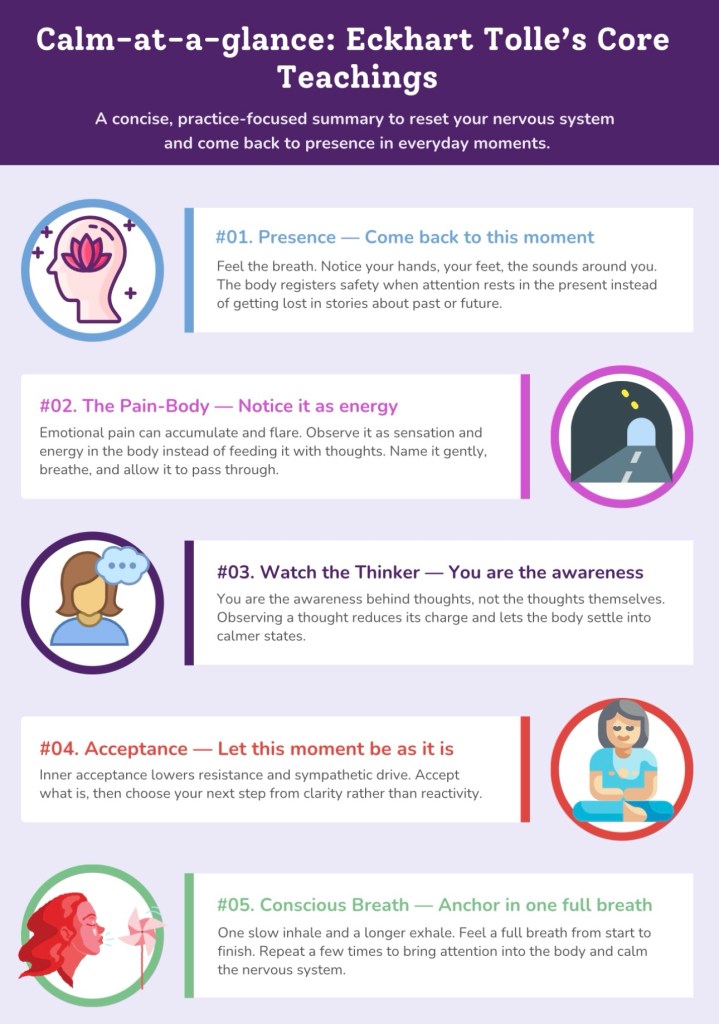
We also made this infographic, view in high res here: https://infograph.venngage.com/ps/xa0zud95Mu0

Here’s a Related Article a reader shared that you may enjoy too:
Being unbothered: 8 steps to a happier life
Most people think happiness comes from improving their circumstances—more money, fewer problems, better relationships, less stress. But real happiness, the kind that lasts, doesn’t come from controlling the world around you.
It comes from mastering the art of being unbothered.
When you’re unbothered, you stop letting every inconvenience, rude comment, unexpected change, or emotional trigger hijack your peace.
You develop a kind of internal steadiness that can’t be shaken by every passing storm.
And here’s the surprising truth: unbothered people aren’t detached or emotionless. They simply know what deserves their energy—and what doesn’t.
If you want a happier, calmer, more grounded life, these eight practices form the foundation.
1. Stop assuming everything needs a reaction
- Not every slight needs a response.
- Not every comment needs clarification.
- Not every misunderstanding needs a full discussion.
One of the telltale signs of emotional maturity is learning to pause rather than pounce.
People who constantly react to everything are always drained, because they give every little thing equal weight.
But the truth is simple:
Most things aren’t worth the emotional price of reacting.
When you stop responding automatically, you gain a level of freedom you didn’t even know you were missing.
2. Master the art of letting people be wrong about you
This one took me years to learn.
I used to exhaust myself trying to correct assumptions, fix misunderstandings, and prove who I really was.
But the older I get, the more I realize:
People who want to misunderstand you will always misunderstand you.
And people who genuinely care will ask—not assume.
Letting people be wrong isn’t about giving up. It’s about refusing to fight battles that don’t matter. Your energy is too precious to spend on convincing people who have already made up their minds.
Let silence do the heavy lifting.
3. Develop inner stillness
If there is one skill that can transform a life more than any other here, it’s learning how to cultivate stillness.
Stillness doesn’t mean emptying your mind—it means learning to observe your thoughts instead of becoming them. It means returning to the breath, the body, the present moment.
This is the core of Buddhist practice and was popularized by Eckhart Tolle
If you’ve ever struggled with stress, overthinking, or emotional reactivity, his teachings will give you a practical roadmap for building the unshakable calm you’ve always wanted.
See our infographic above for a summary of them
Stillness is where clarity begins. It’s where emotional confusion dissolves. It’s where you learn to differentiate between what deserves your attention and what doesn’t.
If you want to be unbothered, it starts with anchoring yourself internally.
4. Build boundaries that protect your peace—not your pride
Many people think boundaries are about drawing lines for other people. But boundaries are really about managing your own energy.
Being unbothered doesn’t mean isolating yourself. It means knowing what drains you and adjusting accordingly.
Some boundaries are firm: “I don’t tolerate disrespect.”
Some boundaries are soft: “I’m not available for emotional dumping today.”
Some boundaries are invisible: “I choose not to engage in this argument.”
When you build boundaries from self-awareness instead of self-protection, they become tools for peace—not walls of avoidance.
5. Release the need to control what others do
Nothing steals your happiness faster than the belief that other people should behave a certain way.
You can’t control:
- how someone talks
- how they feel
- what they choose
- whether they appreciate you
- whether they understand your perspective
Trying to control these things is a recipe for frustration.
Emotionally unbothered people don’t waste time trying to manage others. They focus on what they can control: their own actions, intentions, and responses.
When you detach from the need to shape someone else’s behavior, your emotional life gets infinitely lighter.
6. Learn to differentiate between discomfort and danger
A lot of people react to discomfort as if it’s a threat. A difficult conversation, a disagreement, a change of plans, or someone’s disapproval can trigger a stress response that feels like panic.
But one of the deepest skills in emotional mastery is recognizing:
“This feels uncomfortable, but I am still safe.”
That awareness prevents overreaction.
It lets you breathe instead of spiral. Respond instead of explode. Stay grounded instead of becoming overwhelmed.
Your nervous system becomes steadier when you stop interpreting discomfort as danger.
7. Declutter your emotional environment
Being unbothered is not just about reacting less—it’s about carrying less.
Ask yourself:
- Which grudges am I still holding?
- Which conflicts do I replay in my mind?
- Which disappointments am I clinging to?
- Which people drain me even in their absence?
- Which expectations keep stressing me out?
Emotional clutter is just as real as physical clutter. And it weighs you down more than you think.
Start clearing out what no longer belongs to you. Most of the heaviness you carry is not yours to hold.
8. Choose slowness as a lifestyle, not a luxury
Modern life encourages constant rushing—fast answers, fast decisions, fast reactions, fast opinions. But rushing is the enemy of peace.
Slowness isn’t laziness. It’s intention.
When you slow down:
- You think more clearly
- You speak more gently
- You make better decisions
- You feel more grounded
- You react less impulsively
Slowness is the secret behind the “unbothered energy” so many admire. It creates a psychological buffer between you and the chaos of the world.
Take slower morning routines. Walk slower. Chew slower. Speak slower. Decide slower. Your nervous system will thank you.
Final thoughts
The art of being unbothered isn’t about indifference—it’s about wisdom. It’s about choosing peace over chaos, presence over reactivity, intention over impulse.
And that’s the real key to living a happy life—not avoiding storms, but learning to stand firmly in the middle of them without losing your center.
Recent Posts:
- My progress photos – Rejuvenating peptide serum

- The Facebook Group

- I’ll Show You Mine…. (peptide stack)
- Better healing through better sleep – yes you can!

- Which Brain Peptide is Right for You? New Spray reviewed & selection roadmap 🗺️

- Plavelle Peptide: Jack of many trades for proactive healing

- Allergy, Asthma, MCAS Freedom! These peptides beat our meds

- Make the switch! Peptide replacements for herbs, supps & more

- His & Hers Peptides: how we naturally support hormones Over 40 | Includes peri- & menopause

- 7 breakthrough Peptides for Autism, ADHD and more!

 Diary of Recovery